Stormy seas yet to water down AUKUS as landmark looms
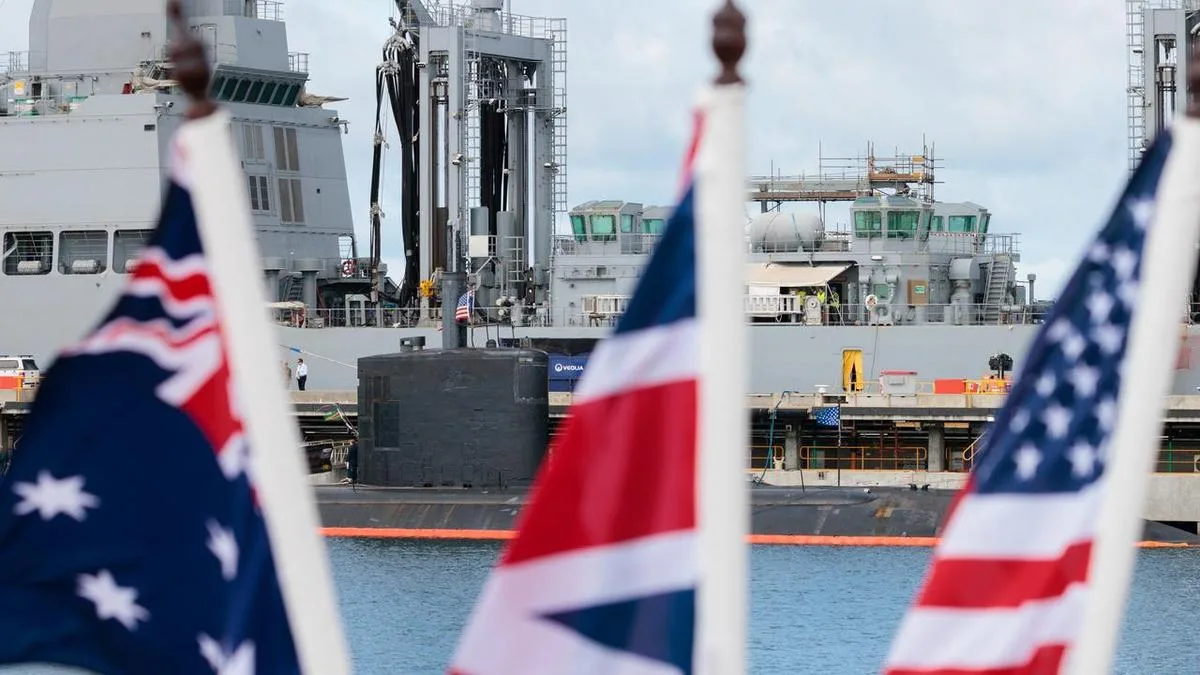
Debate continues to rage over the contentious AUKUS security deal as it marks its five-year anniversary with opponents claiming the multibillion-dollar agreement will not deliver its intended objectives.
Experts remain divided on the future of the pact, signed between Australia, the US and UK five years ago on Wednesday.
Australia is set to acquire nuclear-powered - but conventionally armed - submarines in a $368 billion pathway announced in March 2023.
Critics point to lagging submarine production in the US, warning Australia might not be sold the boats, which have to be signed off by the American president of the day.
Key Pentagon strategist Elbridge Colby reviewed the nuclear-submarine deal and sought clarification from allies to make clear their commitments in the event of potential conflicts.
It would be negligent of the federal government if it was not considering a plan B if there were problems with the agreement, according to security affairs expert Emma Shortis.
"I don't think it's ever too late to change a dangerous policy, to rethink a relationship that has gone toxic," says the Australia Institute's International and Security Affairs program director.
"In a democracy, we need to have an open, honest, broad conversation about what the defence of Australia means and what security would look like ... under a recalibrated relationship with the United States."
The second of the two "pillars" of the agreement focuses on sharing military technology and developing capabilities.
At least three Virginia-class submarines have been promised from the US in the early 2030s before a new fleet of boats is built for delivery from the 2040s.
A British House of Commons defence committee found "shortfalls or delays in funding" could threaten the delivery of the fleet.
Both AUKUS pillars appear to be "on track", Australian Strategic Policy Institute senior analyst Malcolm Davis says.
"Most naval analysts see nuclear-powered submarines as the apex predator of naval warfare.
"They give Australia a vast advantage ... so overall, in terms of our approach to a strategy of deterrence, they are far more effective than would be the case if we went down the path of conventional boats."
5News aggregated this summary from the outlet’s public feed. The full article, with all the context, is on www.perthnow.com.au — the content belongs to PerthNow.