‘I never gave consent’: The Australians being replaced with copies of themselves
Journalists swarmed OpenAI’s Jason Kwon as he walked into NSW parliament on Tuesday. The company’s chief strategy officer had flown in from the US to say sorry. In June, during internal testing, OpenAI’s AI agents had accessed non-public files on a federal Medicare statistics portal.
Kwon gave methodical, matter-of-fact answers to how a US company hacked Australian health data and then took weeks to tell anyone about it. One observer noted he sounded like ChatGPT.
Yet the most damning evidence had arrived hours earlier, from a single voice actor.
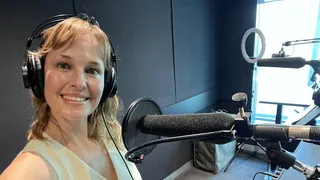
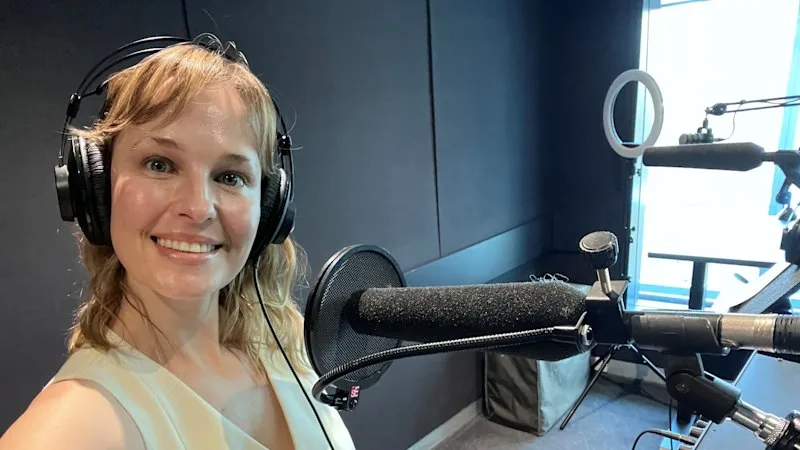
Jacqui Duncan has voiced more than 5000 commercials for Australian radio and television. And, as she told the committee, she owns none of them.
Last financial year, Duncan earned about 30 per cent of what she had consistently made in the three years before. She now works a second job.
“AI voices and performances have definitely played a big part,” she told this masthead. Clients have also used them to push down the rates the union spent years fighting for, she said. “It’s faster and cheaper, so therefore we should be as well.”
Duncan, the NSW president of Equity, the performers’ division of the media union, gave evidence to the Joint Select Committee on Artificial Intelligence. “I never gave consent for my work to be taken,” she said. “Our members are already 62 per cent down on their work in the last 12 months,” Simon Kennedy, president of the Australian Association of Voice Actors, told the same hearing.
Over two days in Sydney and then two in Melbourne, witness after witness described AI reshaping work for voice actors, bank staff and supermarket workers.
When Ford, Toyota and Holden shut their Australian plants, workers got three years’ warning and about $380 million in support from governments and the carmakers. Victoria has put up $14 million for workers at risk from AI.
OpenAI, Anthropic, Microsoft, and Google all put Canberra on notice - Australia’s copyright rules will dictate whether they train their flagship models on local soil. But copyright usually belongs to a studio, label, publisher or advertiser, not to the performer or writer who made the work. Under the deals and funds on the table, the alliance warned, the money flows to whoever holds the copyright.
Duncan has never held the copyright to her own commercials. “But if it’s my biometric data and 20 years of industry skills that go into those performances, I should have a say,” she said. Clients, she said, should not get a performance at all if it “only exists because mine and thousands of others’ training, performance skills, experience and creative consciousness have all been whittled down to ones and zeros, fed into an LLM (for free) and then exported”.
She knows voice artists and actors who have been replaced by AI copies of themselves, their voices or faces used in new campaigns without consent or payment. When one colleague asked a producer why he had not even been consulted, Duncan said, the producer replied that he “assumed consent was given”.
“It’s not about payment; it’s about consent,” Kennedy told the committee.
“Opting out after the fact is too late, because you cannot un-violate somebody.”
5News aggregated this summary from the outlet’s public feed. The full article, with all the context, is on www.brisbanetimes.com.au — the content belongs to Brisbane Times.