Why Iceland’s last whaler says the industry should not be banned
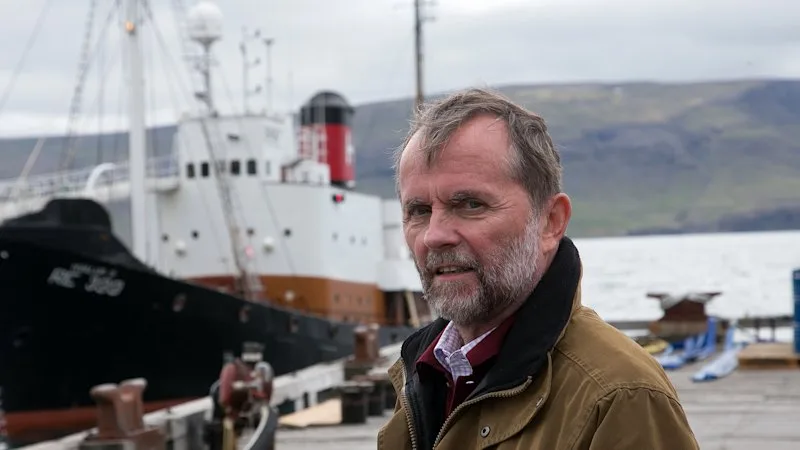
Kristján Loftsson is the last Icelandic whaler, a businessman with a piratical air whose uncle died on a cargo ship torpedoed by a U-boat in the frigid oceans between Greenland and Canada during World War II and who, as a young man, served as a lookout on his father’s first whaling boat.
Today at 83, he has made a fortune from the whaling outfit he inherited – and the sprawling investment and fishery businesses he built from it – yet is famous as the defiant face of an industry that refuses to die. This weekend, the International Whaling Commission will hold its biannual meeting in Hobart, while in Iceland there are political moves afoot to finally shut down Loftsson’s whaling operation, Hvalur.
Loftsson normally attends IWC meetings and maintains a quiet presence as an observer, says Sharon Livermore, the marine program director with the International Fund for Nature, just as he normally avoids media attention.
This year, Loftsson has pulled out of the meeting at the last moment, and is dispatching his son, Loftur Kristjánsson, in his place, but he seems happy enough to speak with this masthead as the meeting approaches.
According to Loftsson, opponents of whaling – whom he refers to collectively “the anti’s” – have taken to speculating that Icelandic whaling will end when he retires. His son’s appearance in Hobart, he says, will signal that it will not. At least not if he can help it.
In conversation with Loftsson, it can be hard to tell if he is speaking with intent or for effect. At one point he says he is considering applying for carbon credits for all the whales he has killed over the years, given the extra carbon dioxide they would have exhaled had they been allowed to live full lives.
As Loftsson sees it, there is no moral or ethical difference between killing, say, a cow, a kangaroo or a whale for human consumption, so long as their populations are healthy and the slaughter humane. Indeed, he seems baffled that Australia does not hunt its own whales.
“You have 40,000 humpback whales on the east coast, and you have 40,000 of different stock on the west coast. What are you going to do with these whales? Just let them swim there forever?”
Loftsson speaks from some experience. He attended the 29th meeting of the IWC in Canberra in 1977, and afterwards flew to Western Australia to join a sperm whale hunt from Albany. He recalls being impressed by the Cheynes Beach Whaling Company’s use of aircraft to spot whales. A year later the business closed, marking the end of whaling in Australia. Since then, while humpback populations enjoyed a spectacular recovery, the bounce-back of southern right whales stalled at about 3500, and sperm whales have never recovered at all.
Today, Hvalur – which means simply “whale” in Icelandic – still runs two whaling vessels after Sea Shepherd activists sank two others in a sabotage attack in port in 1986. This year, those vessels took 93 fin whales, out of a quota assigned by the Icelandic government of 150.
5News aggregated this summary from the outlet’s public feed. The full article, with all the context, is on www.theage.com.au — the content belongs to The Age - Home.