Sweden’s extremely close election could see far right enter government
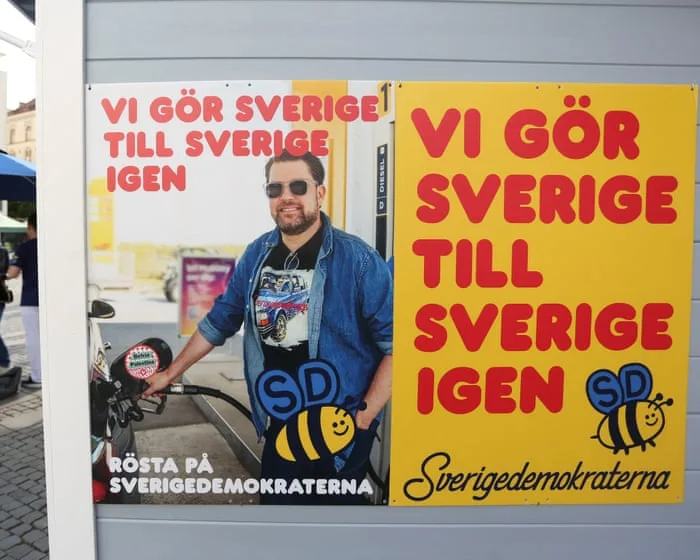
Latest poll shows 0.3-point gap between left and right blocs, with country’s reputation as global champion of human rights said to be at stake
Sweden goes to the polls on Sunday in an extremely close election that could see the far right enter government for the first time if the country’s rightwing parties can form a majority.
Opinion polls show the centre-left opposition alliance ahead, with Magdalena Andersson of the Social Democrats the favourite to become prime minister again after four years in opposition, but her bloc’s lead has narrowed considerably in the final days of the campaign.
In 2022, the current prime minister, Ulf Kristersson, the leader of the centre-right Moderates, broke a longstanding taboo to make a deal with the far-right Sweden Democrats (SD) , so that his minority coalition could form a government.
That agreement gave the SD outsized influence over government policy, especially on crime and immigration, and Kristersson has now gone further, promising ministerial posts for the SD if he is returned to power.
The election comes days after Germany’s nativist Alternative für Deutschland (AfD) seized first place in key state elections, and as Marine Le Pen leads the polls for next year’s presidential vote in France.
Legal and civil rights experts have warned that such a result could further undermine Sweden’s long-held reputation as a global champion of human rights, which has significantly deteriorated under the current government.
“What we have seen in the past four years is huge changes when it comes to policies on crime and immigration,” said John Stauffer, legal director at Civil Rights Defenders.
“That is also the concern moving forward into the next mandate period: that this government will continue with a clear aim to further decrease the number of people coming to Sweden, the number of people who can get protection, and also that as many people as possible with migrant backgrounds leave Sweden – either by force or voluntarily.”
SD’s manifesto includes pledges to introduce “anti-Swedish sentiment in legislation on incitement against ethnic groups”, revoke permanent resident permits and further cut immigration.
Despite recent changes – including the deportation of teenagers, lowering the age of criminal responsibility and sending 14-year-olds to adult prisons – many voters and politicians continued to see Sweden as a “champion of human rights and a champion of the rules-based world order where human rights is an important part”, Stauffer said.
“But it is quite clear that the Sweden Democrats do not have that ambition. They don’t see Sweden as an important player on these issues on human rights. So there will be less focus on this and Sweden contributing to developing the judicial framework around human rights.”
He added: “It’s a fair guess that the negative trend will continue with SD in government, the view from abroad of Sweden will continue to deteriorate, less and less will be seen as a champion of human rights, but as any other country maybe.
5News aggregated this summary from the outlet’s public feed. The full article, with all the context, is on www.theguardian.com — the content belongs to The Guardian Australia - World.