In the shadow of a palace, Beijing’s uncles defy a swimming ban to cool off
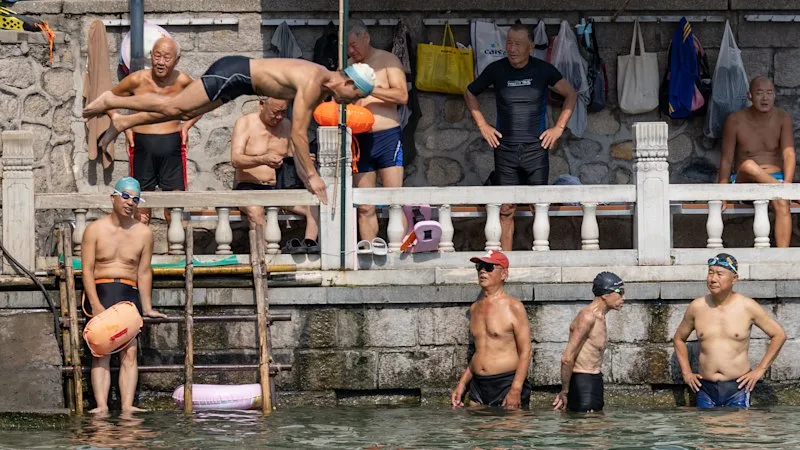
Beijing: It’s just gone past 2.30pm on a sweltering August afternoon, and Wang Jianbao is gingerly descending the steps to the canal that runs past the Summer Palace.
The 92-year-old comes here every day from crisp March through to chilly November, riding his tricycle for 40 minutes through Beijing’s western suburbs for a dip in the shadow of the UNESCO heritage-listed grounds.
He’s not the only one. The unsanctioned swimming spot is not so much a secret, but a local haunt that doubles as an unofficial men’s shed for a regular group of seniors. Equipped with caps, goggles and floaties, they come here for the community as much as the exercise.
Like the salty sea dogs who plunge into Sydney’s beaches each morning, a leathery set of Beijing uncles has been swimming here for decades.
“I am the oldest here. I have nothing to do at home, and it’s good physical exercise,” Wang says. He has swum in the area since his 20s, after coming to Beijing to find work as a bricklayer.
No one knows the lore better than him. Years ago, when authorities tried to ban swimming in the canal, the locals staged a revolt after one swimmer was arrested and handcuffed, he says.
“All other swimmers sat down in front of the security guards’ vehicle so it couldn’t move. We blocked the vehicle until 11pm.
“I told the head of security guard that the Summer Palace belonged to the people, not you: ‘Do you think you can stop people from swimming simply by installing a warning sign?’”
And with that triumphant anecdote complete, Wang slips into the water and sets off on a 400-metre paddle upstream.
On this day, he is one of about 50 swimmers, most of them retired men, though a few women have come to cool off, too. The crowds are bigger than usual because the school holidays have coincided with the blistering dog days of summer called “sanfu” in China – the 10- to 20-day stretch where even cities in the country’s north such as Beijing bake in 35-degree-plus heat.
In the capital, the summer months see the public waterways transform into popular and free open-air swimming pools, often in defiance of no-swimming signs.
This spot is just outside the south gate of the Summer Palace, in north-west Beijing. It is part of the 112-kilometre Jingmi Diversion Canal, an infrastructure project built in the1960s to redirect water from reservoirs and freshwater rivers to shore up the capital’s drinking water supply.
One of the upsides of this, for swimmers at least, is that the water is clean.
“I started swimming here when I was four years old,” Cao Kedong, 64, says. “Locals never dumped rubbish into this river as it was the source of drinking water.”
5News aggregated this summary from the outlet’s public feed. The full article, with all the context, is on www.brisbanetimes.com.au — the content belongs to Brisbane Times.