Nine of the world’s oldest regular trains you can still ride on
Seasoned users of the London Underground have long had a soft spot for the Bakerloo line and its venerable, cushioned carriages, which date back to 1972. Travelling on the line does undeniably feel like a blast from the past – a journey back to a time when train interiors had just a little more class, and were just a hint less utilitarian.
Similarly ancient carriages on Naples’ regional network have just been taken out of service (in favour of swish new Swiss ones), meaning the Bakerloo carriages are now the oldest operating extensively in any major European metropolis – and among the oldest anywhere in the world.
The Bakerloo carriages are expected to remain in use into the 2030s, so there is still plenty of time to ride them. But what of their equally intriguing peers?
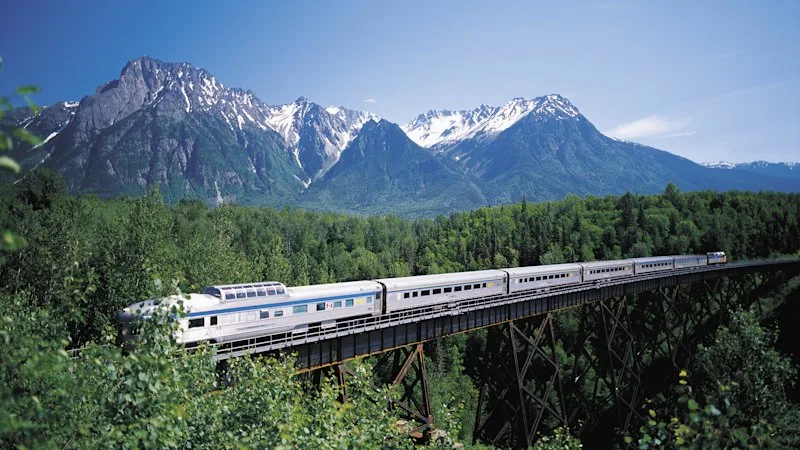
Further afield – from the old wood-panelled classics manufactured in East Germany in the 1960s, to the stainless steel wonders dating back to 1950s Canada – there is still plenty of railway stock operating on regular lines (as opposed to special heritage lines) that conjures up the feel of an earlier era. Here are nine examples to whet the appetite. Your carriage awaits…
Get exclusive travel deals delivered straight to your inbox. Sign up now.
The carriages operating on the Bakerloo line, which links Harrow & Wealdstone and Elephant and Castle, were built by British manufacturer Metro-Cammell between 1972 and 1974, first appearing on the line in 1972. They have an instantly recognisable retro-style interior and a mixture of seating styles, including longer centre-facing strips and small inward-facing pods. Extensively refurbished over the years, they are expected to remain in service until 2035.
Ticket to ride A Bakerloo line journey costs from £3 ($5.70); see tfl.gov.uk.
There are some carriages still in use in Europe that are older than those on the Bakerloo line, but none serving such a busy metropolitan network. In Norway, NSB Class 69 carriages were first manufactured by the Norwegian firm Strommen Vaerksted in 1970 and brought into service a year later. For more than five decades they have been deployed on a number of commuter and regional trains. The carriages are expected to be phased out by 2028.
Ticket to ride NSB Class 69 carriages are used on several Vy services; see vy.no/en .
When it comes to longevity, few can hold a candle to this much-loved train, which has been serving travellers in Poland since 1962 – just a year after its production began at the Pafawag works in Wrocław. With manufacture continuing until 1993, there are hundreds of PKP Class EN57 carriages still in service.
The trains are referred to locally as “kibel” (a rather crude nickname – it’s slang for “toilet” and supposedly stems from the original design, which drew “fresh” air into the carriages via the rudimentary onboard WC), or in the specific case of the EN57-038, “Babcia” (which translates to the rather more wholesome “Grandma”).
5News aggregated this summary from the outlet’s public feed. The full article, with all the context, is on www.brisbanetimes.com.au — the content belongs to Brisbane Times.