The White House says this is the Iran endgame. We’ve heard that before
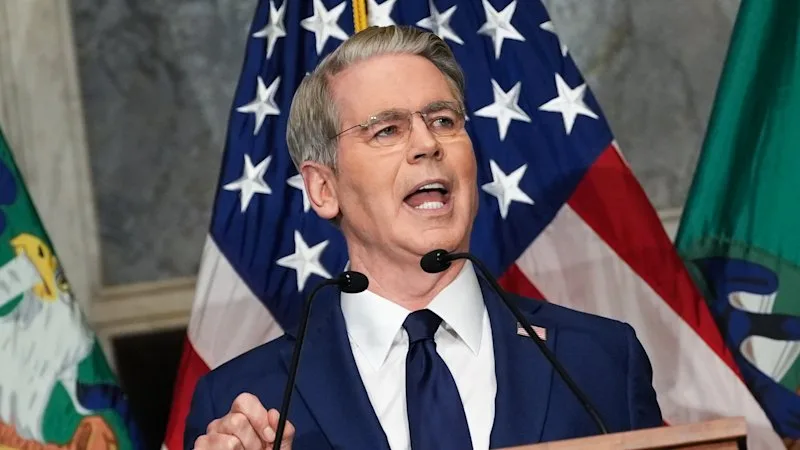
Washington: Scott Bessent gave the game away when he acknowledged the danger in taking the very step he had just told the world he was going to take.
When the US treasury secretary was asked why he was not immediately applying sanctions to Chinese banks that finance Iran’s oil trade, he replied: “We are giving everyone the opportunity to remedy bad behaviour. Why would I want to blow up the global financial system?”
Bessent and his boss, Donald Trump, spent the past week building up Monday’s announcement (US time) of crippling new sanctions against Iran and its enablers.
They said it would be “economic D-Day”. An unprecedented campaign of financial pressure. The White House even billed it as the endgame in the US-Israeli war against Iran.
But what Bessent presented fell far short of that. As is often the case with Trump’s bombastic administration, the substance did not match the rhetoric.
There were fresh sanctions against Iran-linked entities, people and ships, but not the big-ticket blacklisting of banks and financial institutions that enable Iranian commerce. To do that, the US would have to hit clearing houses in the United Arab Emirates, Turkey, India and Pakistan. Mostly, they would have to hit China.
Most analysts do not believe Trump would take such a measure with Chinese President Xi Jinping’s visit to the White House just weeks away. There is too much on the line for a US president who is wary of a full-blown trade war with China and who may still hold out hope of a grand bargain with Beijing.
Daniel Fried, a distinguished fellow at think tank the Atlantic Council and former assistant secretary of state for Europe, said the new sanctions were – in Bessent’s own words – a warning shot, not an “economic death blow”.
“None of the moves was a game-changer. The rhetoric was ferocious, but the punch less so,” Fried said. Going hard, he added, “involves costs and risks that Bessent suggested he isn’t eager to bear”.
Once again, these actions point to an administration that wants to end the war in Iran but doesn’t know how. Moreover, it has lacked a clear goal ever since Trump’s ambition of regime change went out the window and is operating within political, economic and military constraints.
Aaron David Miller, a former State Department negotiator and Middle East expert, wonders if the pain these sanctions are supposed to inflict on Iran will have the desired effect.
“What is the desired effect? That’s a core question?” he says. “Is it to break the regime and lay the basis of regime change? Is it to bring the Iranians to the negotiating table so they will somehow give up their leverage and control of the [Strait of Hormuz]? What is the purpose of this?”
Oddly enough, after months of the US trying to engage with the remnants of Iran’s brutal, fundamentalist Islamic regime, Bessent brought the goal of regime change back to the table during his speech on Monday.
He appealed to Iranian soldiers to think about why they may not be receiving their pay. “Ask whether your commanders are leading your country to triumph or to ruin,” he said.
5News aggregated this summary from the outlet’s public feed. The full article, with all the context, is on www.brisbanetimes.com.au — the content belongs to Brisbane Times.