‘We turn a blind eye’: What your local fish and chip shop order is really doing to the industry and ocean
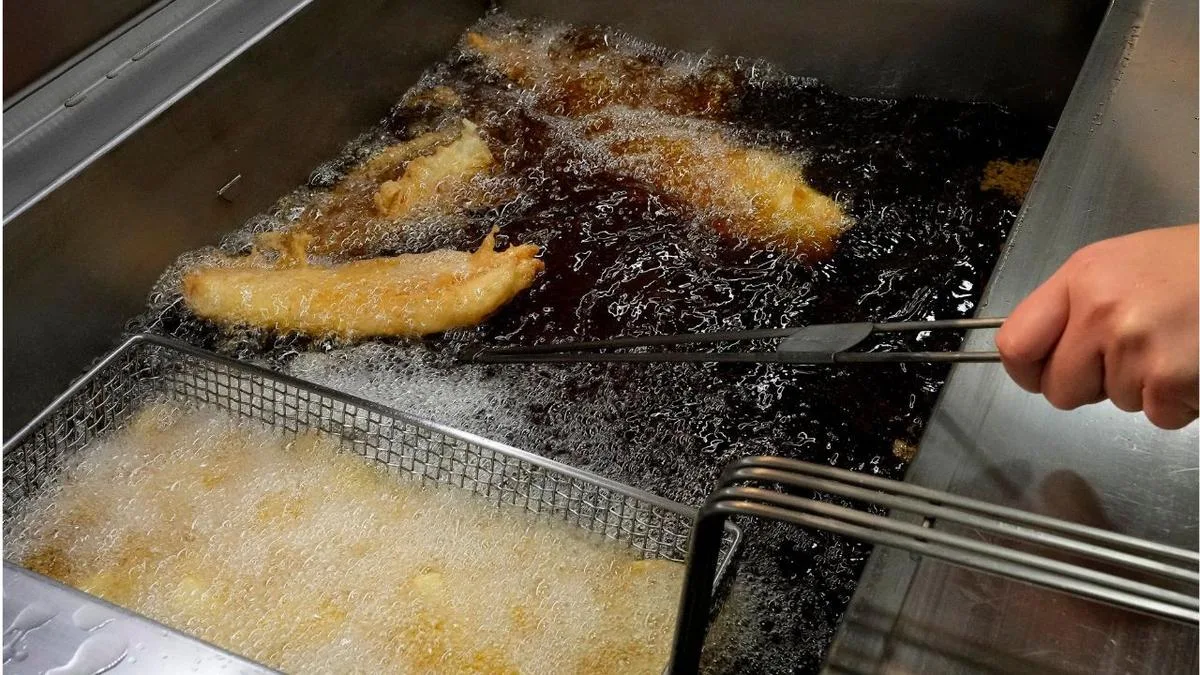
A piece of battered basa might be one of the cheapest fillets at the chippie, but importing seafood comes at a high price for the ocean.
In efforts to protect Australia’s marine environments, the limited local seafood production industry might just be exporting the problem.
A new study calls for a rethink of Australia’s regulatory environment to offer consumers more sustainable local catch, rather than the boatloads of potentially less sustainable imported products.
Despite being a coastal nation with about 8,000,000sqkm of fishing waters, Australia ranks 52nd globally in seafood production.
The dependence on imported seafood for the majority of consumption may be not just shifting the negative impacts but amplifying them, according to a new study released by James Cook University on Wednesday.
“We’ve got a situation where we’re contradicting ourselves,” lead author and senior fisheries researcher Andrew Chin said.
“We hold our domestic fisheries to very high environmental standards but we turn a blind eye when we’re importing our seafood products.
One example is basa catfish — which Australia imports in the thousands of tonnes, and is widely used as a low-cost alternative by fish and chip shops.
Basa is extensively farmed along Vietnam’s Mekong River Delta and has been shown to contaminate the local area with excessive nutrients and antibiotics, as well as being a major drain in terms of feed requirements.
“You can’t just close commercial fisheries and say you’re doing it for environmental reasons, and then import tens of thousands of tonnes of basa from Vietnam,” Chin said.
The authors of the JCU study called for stronger standards, labelling and certification requirements for imported seafood.
They also recommended investing in domestic commercial fishing and aquaculture, alongside regulatory reforms that balance sustainable production with economic viability both for operators and consumers
“We’re definitely not promoting any unsustainable practices but basically determining what is a sustainable catch level for each of our fisheries and trying to maximise that where we can,” study co-author and JCU adjunct senior research fellow Jonathan Smart told AAP.
Smart pointed to the phasing out of gillnet fishing in Queensland which he said had reduced Australian-caught barramundi and king threadfin being supplied to local markets.
5News aggregated this summary from the outlet’s public feed. The full article, with all the context, is on 7news.com.au — the content belongs to 7NEWS Australia.