He’s one of pop’s great technological disruptors. But the AI era fills him with anxiety
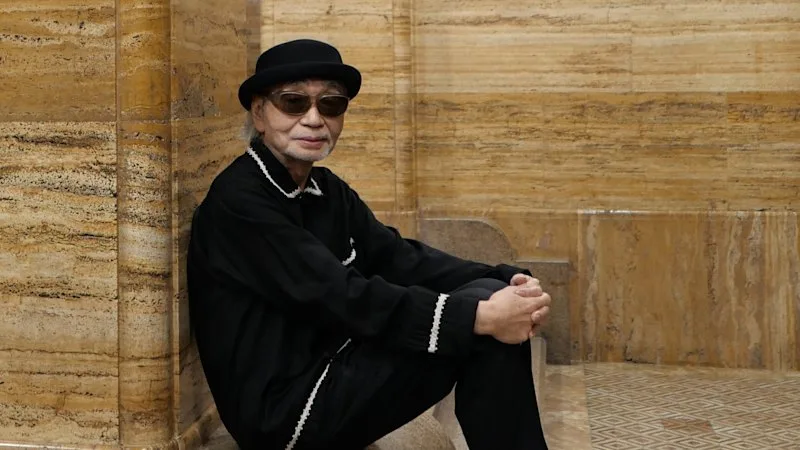
In the studio of the 79-year-old Japanese pop icon Haruomi Hosono is a bust of Ludwig van Beethoven, some flowers and a small bowl of water. He pulled the bust out of storage when it came time to record the track Figlio Perduto for his new album Yours Sincerely , his first collection of new music in seven years.
Hosono’s 23rd studio album features gently soothing electronics and acoustic guitar that feels whimsically reflective, like he’s reaching for his inner child late in life. “Maybe because of my age I might have gone back to being a child. I do have quite a lot of those memories from my childhood,” says Hosono, contemplating the idea.
“Rather than being stories of the past, they are still continuing even now. For example, Beethoven has been glaring at me since I was a child … Now it’s sitting here and I’m praying to it. Until then I had left it alone because I was a bit scared.”
Summing up Hosono’s career is almost impossible. His early work in the band Happy End (1969-1972), then as a solo artist on his debut Hosono House (1973), is frequently cited as a touchstone by indie artists, most notably the similarly prolific Mac DeMarco (the title of Harry Styles’ Grammy-winning album Harry’s House was a homage, too). His later outfit Yellow Magic Orchestra is one of the most influential synth-pop groups of all time.
But if there’s one consistent thread, it can be found on Figlio Perduto , a cover in Japanese of a track by Sarah Brightman that sets an Italian translation of Johann Wolfgang von Goethe’s poem Erlkonig to Beethoven’s Symphony No. 7 .
This iterative, memetic layering of cultures, often with technology, has been a through line of Hosono’s entire career. Born in 1947, Hosono grew up in post-WWII Japan, after nuclear devastation in Hiroshima and Nagasaki, when US popular culture worked its way off military bases and into Japanese life.
“My mother is no longer with us; it’s been about five or six years now. She really loved Hollywood movies and music, and I was heavily influenced by that. From a young age she would play movie soundtracks for me. Her idol was Fred Astaire. I watched those movies a lot as I grew older. My father probably liked it, too; he even said he wanted to be a dancer because of my mother’s influence. That’s the kind of person my mother was. I’m very grateful,” says Hosono.
Happy End was a Japanese approximation of American roots rock. Next, as a solo artist, Hosono began a reflexive reappropriation of 1950s exotica records on his albums Tropical Dandy , Bon Voyage co. and Paraiso , the album on which he first worked with Ryuichi Sakamoto and Yukihiro Takahashi. The three men became Yellow Magic Orchestra, Japan’s most influential band, whose first major hit in 1978 was a subversive synth-pop cover reclaiming the “oriental” melody of the 1959 exotica recording Firecracker by Martin Denny.
Hosono pioneered the use of electronic instruments with his YMO bandmates – each hugely influential solo musicians, producers, session musicians and composers in their own right – and Japanese popular music became increasingly dominated by electronic compositions in the wake of YMO’s peak 1970s and 1980s popularity.
5News aggregated this summary from the outlet’s public feed. The full article, with all the context, is on www.watoday.com.au — the content belongs to WAtoday.