The LNP wants more police, not MPs. Expert says it’s a ‘false economy’
Welcome to Brisbane Times’ Queensland public sector column, Public Circus. This week: a case for democratic improvement, State Development shareholdings, looming teacher pay talks, and the simmering four-day week.
People don’t like the idea of more politicians, according to the widely held belief.
Some people also dislike vegetables, but the consequences of going without are not ideal. And if your doctor suggested you should eat more vegetables, you’d listen – right?
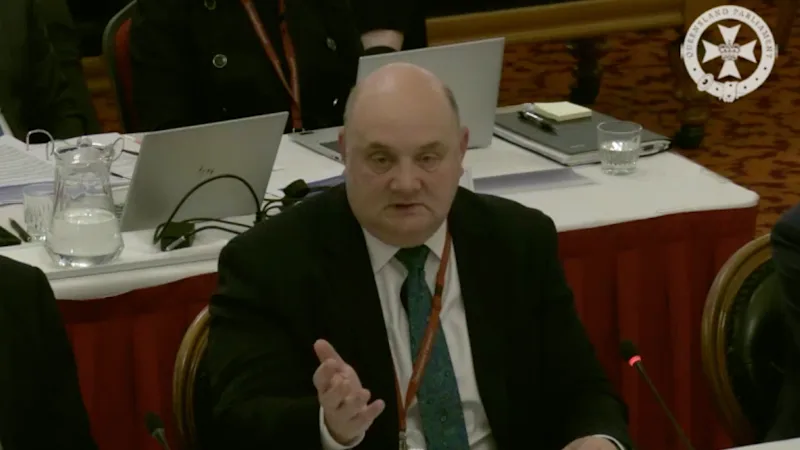
In this metaphor, the doctor is the Clerk of the Parliament of Queensland, Neil Laurie , who has held the top parliamentary service job since 2003.
Responsible for steering MPs through procedures and rules, making sure those proceedings happen as they need to, and running the wider parliamentary service, he knows his stuff.
On the rare occasion Laurie speaks, people usually listen , making his yet-to-be-reported remarks on a recent academic paper about restoring an upper house all the more interesting.
The Legislative Council self-abolished in 1922 , leaving Queensland uniquely placed without an upper house and at the whim of “winner takes all” politics.
Dr Nicholas Aroney revisited his arguments for a new one in a public lecture late last year, and a subsequent paper . Laurie wrote a commentary paper with a more nuanced view .
While proud of the reform he has been part of, and not reflecting on any particular parliament or government, Laurie wrote he is “neither blind nor mute about the institution’s weaknesses”.
Laurie said an upper house would need to be designed properly but, ultimately, would be unlikely to occur due to the need for a referendum and bipartisan support.
Instead, he floats constitutional entrenchment of safeguards, including super-majority style votes to rush bills or add unrelated last-minute amendments.
But he also suggests lifting the number of MPs in parliament to make up for decades of unmatched population growth putting pressure on its ability to properly fulfil its functions.
The usual argument against this on costs is a “false economy”, Laurie says, because an extra $35 million a year – at least – is now being spent supporting strained MPs and their offices.
That’s compared with an estimated cost of $1 million a year for a new MP, office and staff.
5News aggregated this summary from the outlet’s public feed. The full article, with all the context, is on www.brisbanetimes.com.au — the content belongs to Brisbane Times.