Trump has lost control as his ‘little war’ gets a lot bigger
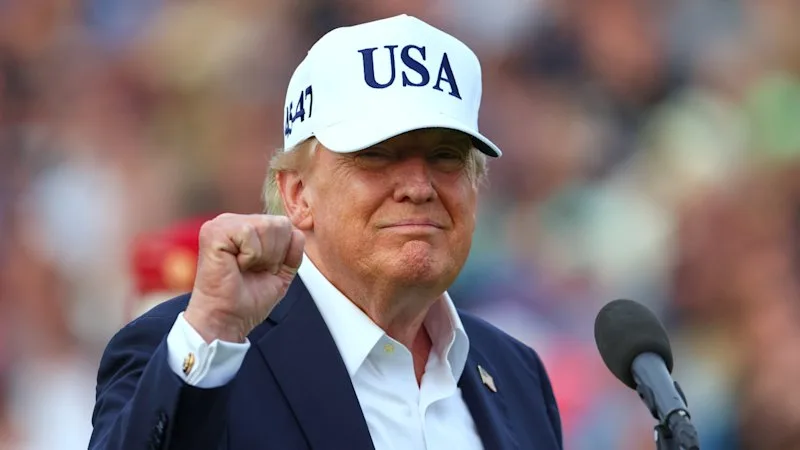
It is an unintended feature of President Donald Trump’s Plan B for defeating Iran – economic strangulation – that the more successful the policy becomes, the more risk the men who run the Islamic Republic are willing to accept to fight it. Judged on that metric, the American blockade and sanctions are working, but they’re also raising the stakes beyond what the US is willing to pay.
This begs the question of how long and disruptive the showdown with Iran is going to be, now that the US president has said he expects it to continue through the November midterms. At that point, Trump believes it will stop quickly, because the Iranians will no longer have the elections as leverage, implying that they’d then be ready to make a deal. That’s optimistic.
According to a September 9 report in The Wall Street Journal , some of Trump’s most senior advisers (the same ones who advised against going to war in February) told him the conflict may outlast his presidency. They’re probably right, and I hope they went a step further, warning him that it’s also likely to expand. His “little war” aimed at regime change in Iran is fast becoming a struggle to determine the future of the wider Middle East and the US role in it.
In truth, everybody is guessing at many of the factors that will decide this issue. We don’t know, for example, how many missiles or launchers the Iranians still have, nor what capacity they have to build new ones or how many they might be able to get elsewhere. We can’t be certain what will happen in energy markets, what political pressure will be brought to bear on Trump or what domestic unrest might unfold in Iran.
Nevertheless, it’s clear that Iran’s Islamic Revolutionary Guard Corps is capable of escalating the conflict in ways it previously avoided, knowing the Americans’ capacity to wreak the civilisation-destroying devastation Trump has threatened. That’s something even the IRGC would try to avoid provoking for as long as it can – but the moment may have arrived.
One such provocation would be the destruction of a US warship, a humiliation for Trump that could leave hundreds of American service people dead or wounded and guarantee harsh retaliation. Iran has finally taken that risk, firing ballistic missiles at several US military vessels since September 4. Even with none hit, the US responded by striking five Iranian oil tankers.
Another gun that long sat over the conflict’s Chekhovian fireplace was the potential for Tehran to get its Houthi allies in Yemen to block the Bab el-Mandeb Strait. This waterway controls traffic in and out of the Red Sea, which is where Saudi Arabia has been diverting about 5 million barrels of crude a day – oil that would normally exit the Persian Gulf via the Strait of Hormuz. Disrupting this alternative route would amplify the effects of Iran’s blockage in Hormuz and could have a significant impact on the global trade costs and inflation.
The Houthis – reportedly aided by IRGC guidance and Iranian promises of money and arms – have now taken that gun off the wall .
5News aggregated this summary from the outlet’s public feed. The full article, with all the context, is on www.theage.com.au — the content belongs to The Age - Home.