Trump order to limit US birthright citizenship blocked
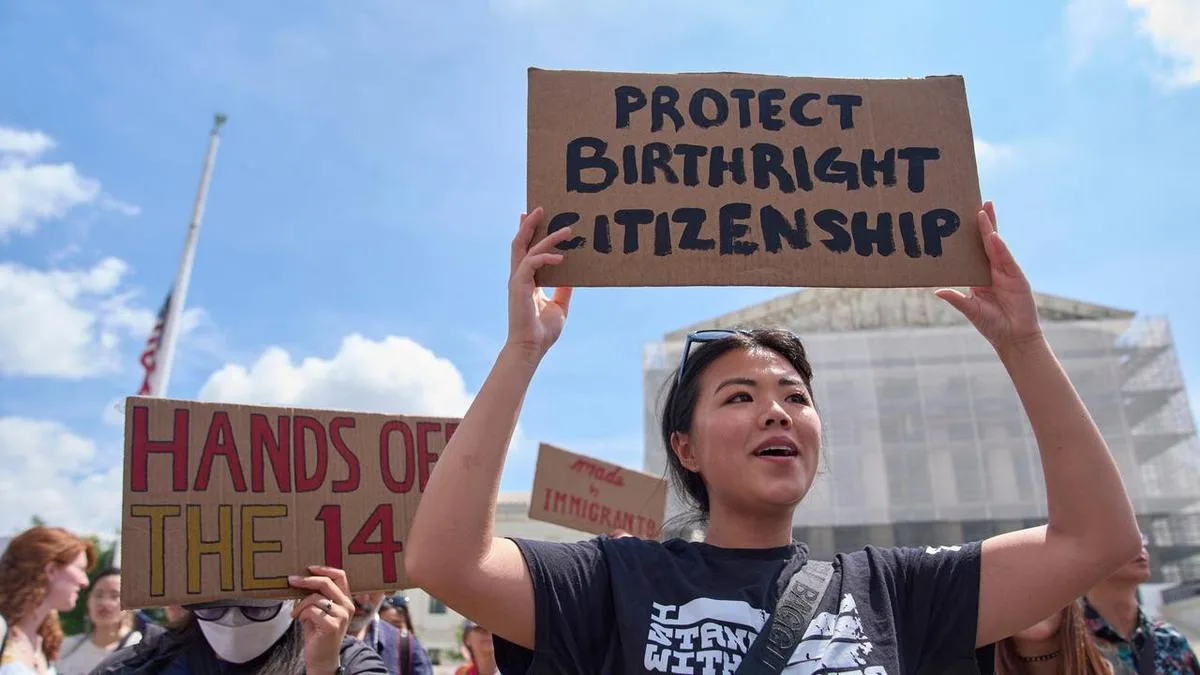
A US federal judge has blocked the Trump administration from enforcing a new executive order limiting the number of people eligible for birthright citizenship that President Donald Trump issued after the Supreme Court rejected his previous effort.
US District Judge Deborah Boardman in Greenbelt, Maryland, issued a preliminary injunction on Wednesday at the request of immigrant rights advocates who had in 2025 secured a ruling from her blocking the Trump administration from enforcing his initial executive order earlier that year curtailing birthright citizenship.
The US Supreme Court on June 30 rejected that initial effort to end birthright citizenship for children whose parents were not American citizens or legal permanent residents, known as green card holders, finding it violated the citizenship clause of the US Constitution's 14th Amendment.
The clause confers citizenship to those born in the United States who are "subject to the jurisdiction thereof".
Following that decision, Trump signed a new order on August 6 that took particular aim at "birth tourism," in which women travel to the US to give birth so their children can obtain automatic citizenship.
Citizenship would also be denied to children if one of their parents works for foreign governments in the US, engaged in fraud or a commercial transaction to obtain citizenship, or is classified as an "alien enemy".
After he signed that order, lawyers pursuing a class-action lawsuit on behalf of babies who would be deprived citizenship under Trump's 2025 order asked Boardman to block enforcement of the Republican president's newest order, and ensure their clients' citizenship continued to be honoured.
The plaintiffs included the immigrant rights groups CASA and Asylum Seeker Advocacy Project, which had last year convinced Boardman to become one of four lower-court judges to block Trump's initial order prior to the Supreme Court ruling.
Boardman, an appointee of Democratic President Joe Biden, at a hearing on Friday declined to immediately block Trump's newest order. But she expressed scepticism of it and allowed the plaintiffs to revise their lawsuit so she could consider whether to block what she called an "unprecedented" order.
Justice Department attorneys argued a restraining order was inappropriate in this case, as Trump's order was more narrow than the sweeping one the plaintiffs had first sued over.
They also called the lawsuit premature, saying federal agencies had yet to issue the necessary public guidance detailing how the president's directive would be implemented, which they are expected to do by Saturday. Any legal challenge should wait until then, the administration argued.
5News aggregated this summary from the outlet’s public feed. The full article, with all the context, is on www.perthnow.com.au — the content belongs to PerthNow.