WA hit by worst coral bleaching on record across 2000km of coastline
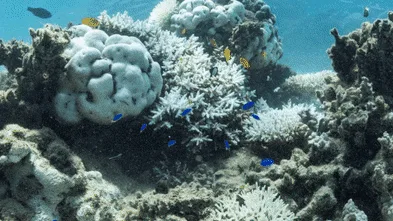
Western Australia’s reefs recently experienced the most widespread coral bleaching event on record, a new report has found, with around 2000 kilometres destroyed as temperatures soared between August 2024 and June 2025.
Heat stress remained persistent for between 80 and 160 days along much of the stretch of coastline, the Status of Coral Reefs of the World 2025 published on Monday afternoon revealed.
But the majority of the report did not capture the most recent bleaching event, and was focused on data collated between 1980 and 2024.
It is “the most detailed assessment of the status of the world’s coral reefs to date”, pulling together more than 21.1 million observations from 87,299 surveys, representing 36,886 sites across 124 countries.
It found in WA, extreme heat stress accumulations of greater than 20 degrees over a span of weeks was expected to result in near-complete, reef-wide coral mortality.
Australian Institute of Marine Science coral reef ecology principal research scientist Dr James Gilmour said that metric was “something like two degrees above normal for a 10-week duration, and that’s very considerable stress”.
“If you find temperatures at any one point in time are more than two or three degrees above normal, then certainly most corals would die from that,” he said.
“In some parts, temperatures were as high as four degrees above normal at one time so essentially, in those areas, many corals are just basically cooked in a one-off rather than over a duration.
“There are patches that survive – usually they’re more the encrusting or circular corals, they’re not the ones that really give a lot of habitat to the reef.”
The report stated that most of the Pilbara reefs experienced extreme bleaching and mortality, at greater than 75 per cent, while coral communities at world-heritage listed Ningaloo Reef – the world’s longest fringing reef – recorded the most severe bleaching on record with between 30 and 70 per cent damaged.
Gilmour said the report did not fully capture the impact of the most recent mass bleaching event in Ningaloo in 2025 , which was the worst on record for Australian coral reefs.
“We do see good recovery of our reefs, and that’s a good reflection on our management and the efforts here, but for the first time last year we really saw all of WA’s most significant reefs affected in one event, and that’s fairly new and novel, but that’s not captured in this report,” he said.
“From a severe bleaching, it takes about five to 10 years for them to recover but since 2010, we’re starting to see gaps between bleaching of certainly less than 10 years, and in some places of a few years.
“The Pilbara, in particular, is one area that’s been affected many, many times.”
5News aggregated this summary from the outlet’s public feed. The full article, with all the context, is on www.smh.com.au — the content belongs to Sydney Morning Herald - Home.