Floating hotels and student digs: Solving Brisbane’s 2032 bed crunch
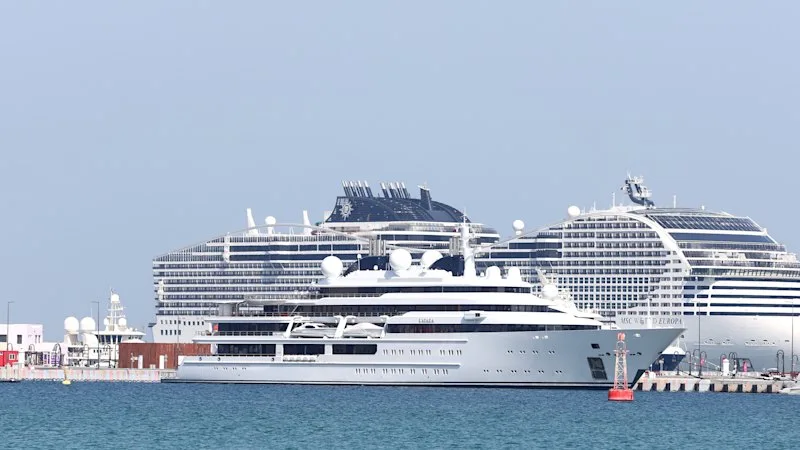
Berthed cruise ships, urban camping grounds and multimillion-dollar yachts could help counter an expected hotel room shortage for the Brisbane Olympic Games, with thousands of visitors set to descend on the city in 2032.
A Committee for Brisbane roundtable lunch brought together five industry leaders on Tuesday to offer some hotel alternatives, with the city’s waterfront set to have a major role.
Port of Brisbane executive general manager Brendan Connell said the “poster child” of medium-sized Olympic hosts remained Barcelona.
“They floated in 11 cruise ships around that time, and it was a raging success, to the point now where Barcelona is one of the leading cruise destinations in all of Europe,” he said.
“There is a lot of history there, there’s a model there, and it’s a really obvious answer to what’s going to be a short-term surge.”
At the 1992 Games, Connell said, cruise ships that berthed at Barcelona had about 1000 people on board. These days, they hold many more.
But Connell noted there were current constraints – the Brisbane International Cruise Terminal can only take one vessel at a time.
“We are at the Port of Brisbane – it’s not just the cruise terminals – so there’s a lot of quayline space where we could potentially fit more cruise ships,” he said.
“There is a huge opportunity there. It’s just something that’s going to take a bit of time to get in place, so we need to act now.”
Given that superyachts can legally only house a maximum of 12 people, industry chief David Good conceded his sector could not solve the problem.
But the 200 superyachts that he expected could make the journey to south-east Queensland in 2032 could help pay for the Games, with the Brisbane River expected to be prime real estate.
Good said he was meeting with Maritime Safety Queensland after the lunch to push for additional moorings, which could be used by recreational boaties when the Games were not in town.
“One [legacy] that we can measure is the value that these vessels and the crew will inject – it’s worth $1.8 billion,” he said.
“I don’t know what the total cost of the Olympics is going to end up being, but $1.8 billion is a pretty good payback from just 200 vessels.
5News aggregated this summary from the outlet’s public feed. The full article, with all the context, is on www.watoday.com.au — the content belongs to WAtoday.