After Caitlin’s death, her family lost control of her body. This law will change that
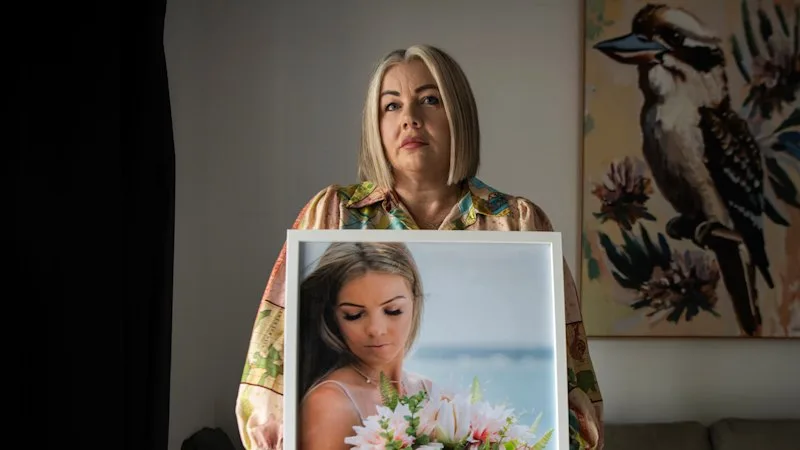
When Caitlin Thornton died in March 2023, her family waited more than a month to hold a funeral and bury her because the man once accused of abusing her held the legal power to refuse access to her body.
“Without a will, she was unable to have a funeral without his consent,” Thornton’s mother Kylie Bailey said on Tuesday.
“We couldn’t bury our child for nearly seven weeks, because we were in a fight with [him] personally.”
Alex Passfield, who was facing serious assault charges against Thornton at the time of her death, became her legal next of kin, giving him control over her bank accounts and her remains.
Under current NSW laws, when a person died without a will, the hierarchy of rights prioritises a spouse or partner over children, parents and siblings.
The Minns government announced on Tuesday it will introduce new laws giving the coroner power to appoint an alternative next of kin in cases which involve family and domestic violence, or estrangement. It comes amid renewed concern about domestic and family violence following a spate of alleged murders in NSW.
Dubbed Caitlin’s Law, the reforms are part of a broader review into the coronial system, which the government says it will begin consulting on early next year.
But on Tuesday, Attorney-General Michael Daley said the changes “couldn’t wait”.
The charges against Passfield were eventually dropped and nothing was proven against him, but this masthead has previously reported that in the days after Thornton’s death, he sent Bailey abusive text messages as she attempted to collect her daughter’s items and organise her funeral.
Bank records also showed that Thornton’s remaining funds were transferred from her account to one linked to Passfield.
Since Thornton’s death, Passfield has been convicted of more than a dozen domestic violence-related offences and was jailed for domestic violence assault and stalking relating to a separate former partner.
The changes announced on Tuesday will also give the coroner the power to appoint an alternative next of kin in cases of estrangement. Nicole Barry, whose sister Megan Best died suddenly at the age of 38 in 2025, described discovering in the days after her sister’s death that her ex-partner would be named next of kin.
“The man that caused her so much pain and suffering in the lead-up to her death was the one that was responsible for what was going to happen to her,” she said.
The government also introduced new laws reforming how adult sexual assault trials are run, which are aimed at avoiding re-traumatising complainants and curbing inappropriate lines of questioning .
5News aggregated this summary from the outlet’s public feed. The full article, with all the context, is on www.theage.com.au — the content belongs to The Age - Home.