2026 GWM Cannon Alpha prices: Flagship ute gets new 3.0L diesel, new-generation infotainment
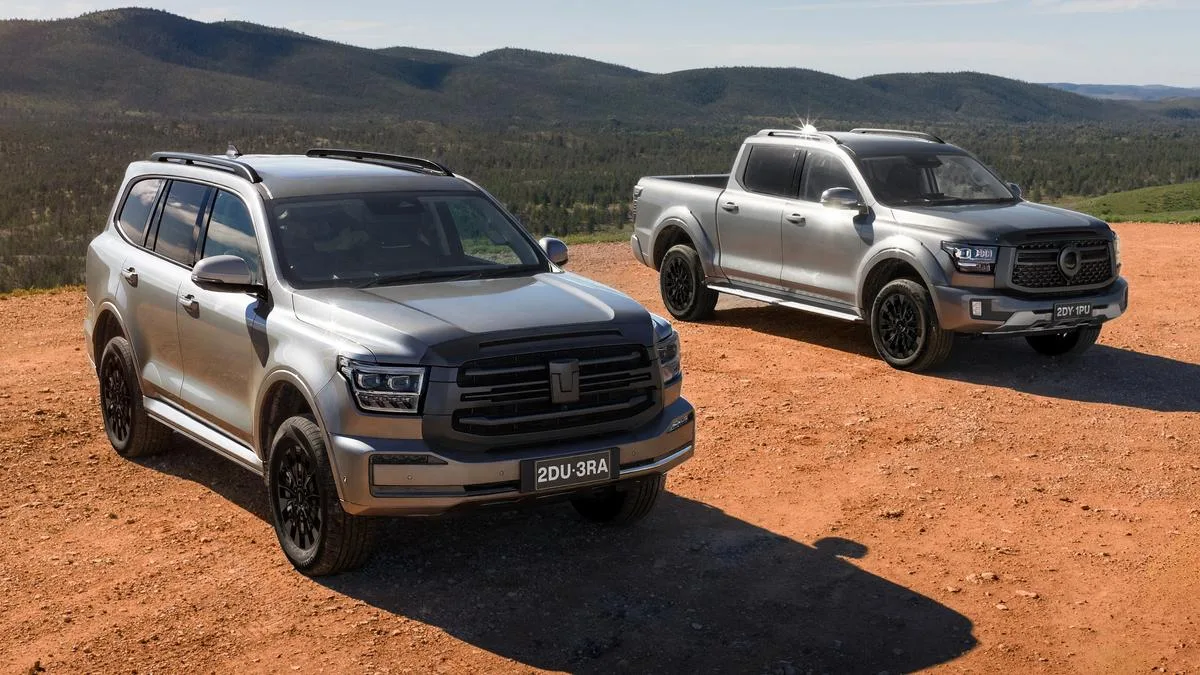
The GWM Cannon Alpha once again has a power and torque advantage over the smaller Cannon with the introduction of a new 3.0-litre turbo-diesel four-cylinder engine, which produces more torque than V6-powered Ford Rangers .
The new 3.0L Cannon Alpha is available to pre-order now, ahead of first deliveries via GWM dealerships from mid-September alongside the related 3.0L Tank 500 . GWM says it has already received more than 1000 expressions of interest across both ute model lines.
Producing 170kW of power and 620Nm of torque, the new engine delivers an additional 35kW and 140Nm over the 2.4-litre diesel engine it replaces, and which remains in the smaller Cannon.
The 620Nm torque figure also exceeds that of the 3.0-litre turbo-diesel V6 offered in the Ford Ranger ute and Everest off-road SUV, which produces 600Nm. Ford’s diesel V6 retains a 14kW power advantage, however, with an output of 184kW.
Nevertheless, the Cannon Alpha now has the four-cylinder turbo-diesel engine with the most power and torque in the segment.
The new engine is mated with a nine-speed automatic transmission and a part-time four-wheel drive system with selectable low-range gearing and locking front, centre and rear differentials.
Joining the plug-in hybrid (PHEV), the Cannon Alpha 3.0L diesel is available in Lux and Vanta trims, priced at $58,990 and $63,990 drive-away, respectively.
GWM Australia is also offering a choice of either a $2000 discount ("cash bonus") or $2000 fuel card for vehicles purchased before October 30, 2026.
The base Lux costs just $1090 more than the entry-level XL trim in the Ranger dual-cab ute, while even the flagship Vanta undercuts the mid-spec Ranger XLT V6 dual-cab ute by $4000. However, the old 2.4L Cannon Alpha was priced at $52,990 drive-away in Lux trim and $58,990 drive-away in Ultra trim.
🚘 Don’t just read about your next car. Find a great deal with CarExpert.
The 3.0-litre Cannon Alpha range has a kerb weight of 2550kg, a payload of 945kg, and therefore a gross vehicle mass (GVM) of 3495kg. Braked towing capacity is 3500kg.
While the old 2.4-litre and the existing PHEV both match the 3.0L in terms of braked towing capacity, they had a total payload of only 760-821kg (diesel) or 685kg (PHEV).
GWM Australia says the new powertrain has undergone more than six months of local engineering and validation testing under its lead product dynamics and integration manager, former Holden engineer Rob Trubiani.
It claims development of the new powertrain was focused not only on delivering higher performance, but also improved efficiency.
5News aggregated this summary from the outlet’s public feed. The full article, with all the context, is on www.perthnow.com.au — the content belongs to PerthNow.