2027 Hyundai Grandeur Calligraphy review: Quick drive
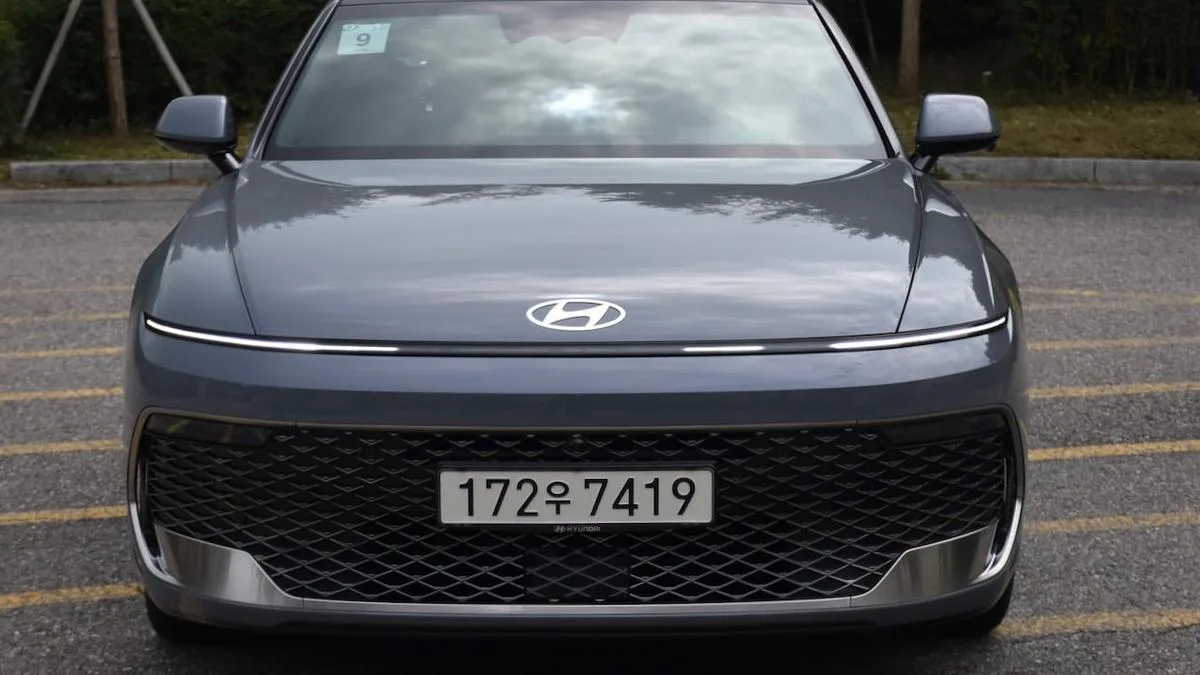
Australia first saw the Hyundai Grandeur in late 1999, and it was a pretty ambitious move from the South Korean automaker.
The Grandeur was positioned as the flagship of the Hyundai range, from a brand that was known for undercutting the Japanese with value-laden cars – often with some quirky designs.
And while a five-speed auto, ABS, alloy wheels, four-wheel disc brakes, power steering, air-conditioning, a six-speaker sound system, remote boot and fuel cap releases, cloth seat trim and central locking don’t sound impressive by today’s standards, the 3.0-litre petrol V6-powered Grandeur impressed plenty of buyers with its standard features and sub-$40,000 price tag.
The second Grandeur sold here had an attractive and mature – though ultimately forgettable – design and despite the upgrade to a 3.8-litre V6 and more gear, Hyundai Australia quietly dropped the sedan from the lineup in 2011. Aside from the creeping popularity of SUVs, if Aussies weren’t buying Holden Commodores and Ford Falcons, they were choosing a Nissan Maxima, Toyota Camry or Mitsubishi Magna.
But the Grandeur lived on overseas, and now competes with the Tesla Model Y and Kia Sorento for the top sales spot in its native South Korea.
In fact, you can hardly turn your head in Seoul today without seeing one – complete with blue foam door pads. Designed to be removed by dealerships at delivery, the little squares of foam have become something of a fad, symbolising to the world that you’ve bought a new car. (Even if some people are clearly buying them online and fitting them to 15-year-old cars.)
Though there appear to be no plans to reintroduce the Grandeur to the Australian market, the model is one of the first to receive Hyundai’s new Pleos Connect infotainment system, and CarExpert was invited to test both the car and the new system in Seoul ahead of the local release of Pleos.
Why is this a big deal? Well, the company’s CEO recently announced that Hyundai was now pivoting to artificial intelligence (AI), robotics, and ‘software-defined vehicles’ – with Pleos integrating a conversational AI agent into its system. This is the first major step in the company’s new direction.
For Australian buyers, the Grandeur also previews Hyundai’s future model lineup, with regard to both technology and interior design.
Of course, there’s more to Pleos Connect than just AI, but this does feel like a glimpse at the next stage of the automotive industry – having your own personal concierge available as you drive. We’ll get into that more below.
We had two limited drives in the Hyundai Grandeur, with the Calligraphy being one of the higher variants – though this one had the entry 2.5-litre powertrain.
Considering the first Grandeur was a basic three-box shape with a busy front-end – with extra chrome to elevate its stature – the latest Grandeur is a properly elegant thing.
5News aggregated this summary from the outlet’s public feed. The full article, with all the context, is on www.perthnow.com.au — the content belongs to PerthNow.