I visited Dollywood on a holiday. Like Dolly herself, it’s totally unique
I am standing in a theme park gift shop holding a bright red T-shirt with Dolly Parton’s face on the front. “Probably not,” I say, and pick a dark green one that says “Dollywood” instead. Normally, I would sprint past the merch. Today I have stopped. I want something to take home.
When my Texas-raised wife suggested a trip to Knoxville, Tennessee, to visit relatives, I looked up what else was nearby and saw a theme park in the Smoky Mountains owned by Dolly Parton. I love rollercoasters. Dollywood has 11. I could take or leave Dolly Parton.
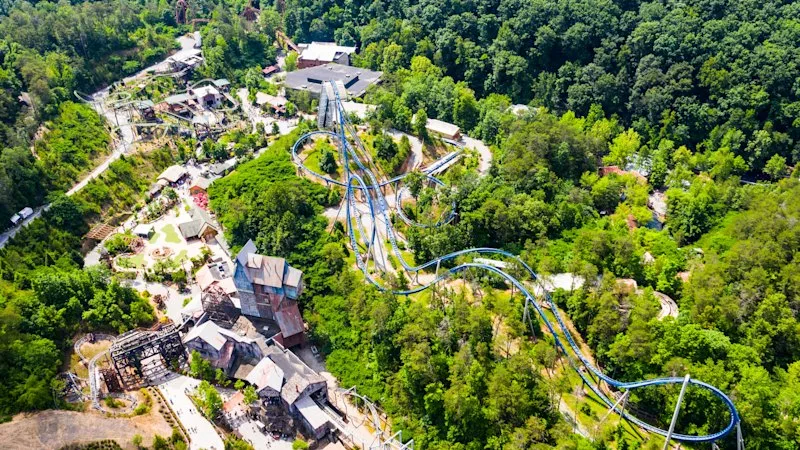
Wild Eagle is known as a “wing coaster”. Riders sit either side of the track, feet dangling. It has four inversions and drops you 40 metres at 100km/h. I ride it three times. I expected to like it. I did not expect to leave a Dolly Parton fan.
That was two years ago. On Wednesday, the country music legend died in Nashville, aged 80 . I had one chance to meet her, and turned it down.
Get exclusive travel deals delivered straight to your inbox. Sign up now.
Dollywood opened in 1986 in Pigeon Forge, a 100-kilometre drive from Knoxville, in the foothills of the Smokies. A replica of the two-room cabin in nearby Locust Ridge where Parton grew up with her parents and 11 siblings stands inside the entrance. It had no electricity or running water. Her brother, Bobby, built the replica himself. It is smaller than our motel room.
It is a week before Christmas, and Dollywood feels unlike any theme park I’ve been to.
We watch a Christmas show in which Parton’s nieces, nephews and cousins perform on stage. The crowd is older than any theme-park crowd I’ve seen, and they sing along to every number. The couple beside me say they’ve been coming for more than 30 years, first with their kids, now with their grandkids.
At night, 6 million lights are switched on across the park. We take a steam train ride, a relaxing 20-minute loop through the mountains, hot chocolate in hand, the lights running up the slopes on both sides of the track .
I came here thinking of Dolly as someone my wife loved. Seeing her whole story built into the place, the cabin, the family on stage, the songs, I left understanding why.
After two days in nearby Sevierville, home to a Dolly Parton statue, we point the car west, towards Nashville, the city in which the singer-songwriter made her name. We go to the Country Music Hall of Fame and read every plaque, and it stops being only about Parton. It’s also about Hank Williams, Johnny Cash and Patsy Cline, names I also ignored growing up in Australia. I came for Parton but left wanting to hear all of them.
We buy tickets to the Grand Ole Opry, the most famous stage in country music, where shows have been run for a century. Parton is not playing, but her face is the first thing you see in the Opry Plaza, in a mural several metres high. On my last day, I find a bookshop and buy Songteller: A Life in Lyrics , Parton’s 2020 memoir about many of the songs she wrote. I read most of it on the long flight home.
A few months later, Dollywood invites me back for an exhibit opening and media lunch. Parton will be there. I seriously consider flying back. In the end I say no.
5News aggregated this summary from the outlet’s public feed. The full article, with all the context, is on www.smh.com.au — the content belongs to Sydney Morning Herald - Home.