‘Moving at light speed’: Plug-in solar and batteries are coming to Australia
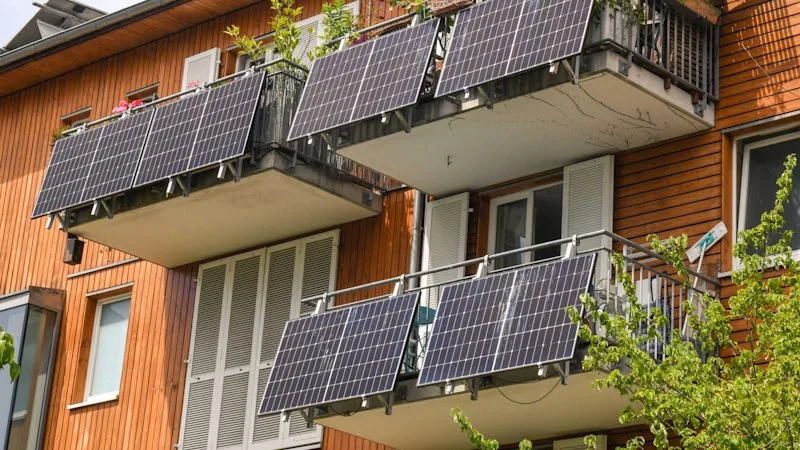
Apartment residents could soon be able to buy plug-in batteries to store cheap or free power produced during the day to use in the evening even without solar panels.
The plug-in home batteries for energy storage are part of reforms that would also usher in portable panels, broadening access to solar power to renters and apartment dwellers.
Climate Change and Energy Minister Chris Bowen said all states and territories had agreed to look at how plug-in solar and batteries could work in Australia to give apartment dwellers and renters more control over their bills.
“A third of Australians have a solar panel on their roofs. It’s more popular than the backyard pool,” Bowen said.
“Now we’re taking the next step, by looking at how even more Australians can take advantage of free, abundant sunshine to cut their energy bills - even if they don’t have a roof.”
As reported previously by this masthead, plug-in solar allows consumers to buy panels for about $500 each that hang in an outdoor area and plug into a socket to power any appliances, charge a battery or feed into the grid. The device does not need to be installed by an electrician and the owner can take it with them when they move home.
The technology is widely used in Germany; increasing in other European countries such as France and Spain and many US states; and was recently legalised in Britain. It is currently unlawful in Australia, though the market is growing anyway and a number of online retailers already sell systems here.
The federal and state climate change and energy ministers agreed on Friday to progress legal and regulatory reforms that would enable widespread adoption in Australia, with a key deadline by mid next year. New Zealand is separately working to enable plug-in solar.
Glen Morris, director of Smart Energy Lab and a member of the Solar Standards Committee, said Australia had been lagging but was now moving at light speed given it usually took years to develop new standards.
“It went from zero to 100 in one day.” Morris said. “I was prepared for a very long campaign to get it through … but obviously, when there’s political will, things can move a bit faster.”
The main change required was an amendment to the Australian standard for inverter systems, which could be fast-tracked by copying international standards, he said.
“The products designed for the European market already have the safety features we like – it’s important that we don’t turn it into a very complex process, so that it can be done swiftly.
“To some extent, the horse has bolted because people can buy these and the only thing stopping them plugging it in is that it’s illegal. But it’s not very obvious – certainly if you don’t have solar panels and just have a plug-in battery system, no one would know.”
Francis Vierboom, chief executive of Rewiring Australia, said the real game changer for apartment dwellers could be “suitcase batteries” because the panels required outside space but the batteries could be deployed separately to solar.
5News aggregated this summary from the outlet’s public feed. The full article, with all the context, is on www.watoday.com.au — the content belongs to WAtoday.