Formula 1 unveiled a new track on Sunday. The race was even worse than feared
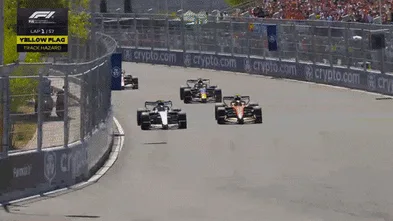
Despite all the hype, the first Spanish Grand Prix at the Madring was a bit of a damp squib. It was not met that warmly by fans watching at home on television and the drivers were critical as well.
The biggest problem was the lack of overtaking. When you create a circuit from scratch, as is the case in Madrid, it is unforgivable to end up with a layout like this.
From before a car turned a wheel it was clear that any action in the race was going to be very difficult.
Yes, it may have been a decent challenge for the drivers as well as the engineers, but that should not be the most important part of the equation. People – including the drivers – want to have at least a chance of overtaking.
The fact that leader Charles Leclerc, on old tyres, managed to stay in front of Kimi Antonelli, on fresh ones, for as long as he did underlines how hard passing was. It was almost like Monaco, if you replace the casino, harbour and glamorous hotels for a conference centre, a motorway intersection and soulless airport hotels. To add to that, Pierre Gasly did the full race minus one lap on one set of hards, so Pirelli got their calculations wrong on how degrading it was going to be on tyres.
There are plenty of corners – many of them blind – that lead into one another. This means that there is not a choice of lines for the corner. With sections like this, especially when you are braking and turning left slightly for a right-hander to set up the next corner, there is no room for another car.
The risk a driver takes in attempting an overtake is large. Crashing into the car ahead or into the wall are the two most likely outcomes. There were not many run-off areas, either, which act as a safety net. Another problem was a lack of switchbacks, where you can go up the inside knowing that on the exit of the corner you can brave it on the outside or vice versa, like the first chicane at Monza.
Some of the best tracks where we see some overtaking, like Silverstone and Spa, are open, whereas Madrid is confined and closed. You cannot see what is happening ahead which further complicates things. The Circuit de Barcelona-Catalunya, which has been criticised for years for being poor for racing, would have been better than this.
As for the long, banked corner “la Monumental”? Is it really that great to see the cars going around a banked corner like that? In some ways, yes, but what does it do for the racing? Almost nothing. It is just another banked corner, it is nothing special. F1 had gone to great lengths to call it “iconic” in the run-up to the race, which was ridiculous before they had even raced a lap on it. In any case, given the limitations of these cars in the way they deploy power, it was not a flat-out corner. As Fernando Alonso said, the Aston Martin press officer could tackle it without too many problems.
The weekend sums up the problem with the direction of modern Formula One. Yes, the popularity of the sport has increased enormously and having races in or near major cities makes sense financially. But the racing itself needs to be worth watching.
5News aggregated this summary from the outlet’s public feed. The full article, with all the context, is on www.watoday.com.au — the content belongs to WAtoday.