Nepal floods: How did the floods happen? What triggered the disaster that left 34 Australians missing
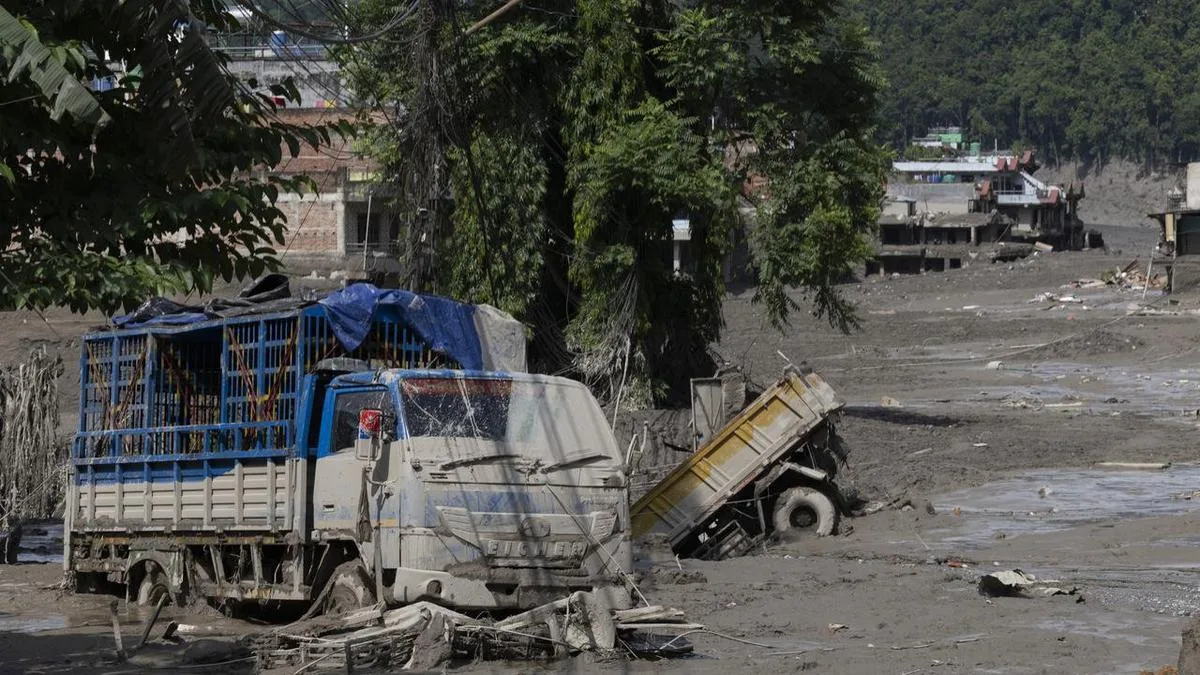
With at least 34 Australians missing after catastrophic flash floods tore through Nepal and neighbouring Tibet, attention is turning to how a wall of water capable of destroying roads, bridges and entire communities could have struck with seemingly little warning.
Scientists are still piecing together exactly what happened, with early theories ranging from an earthquake and avalanche to a burst glacial lake.
But a preliminary assessment now points towards a huge section of glacier breaking away and plunging more than a kilometre into the Himalayan valley below, potentially setting off a devastating chain reaction.
A massive torrent of water, mud and debris suddenly surged through Nepal’s mountainous Rasuwa region and areas near the border with Tibet on Wednesday.
Footage captured the fast-moving floodwaters tearing through the Himalayan valley, destroying roads, bridges, buildings and other critical infrastructure in its path.
Initial reports suggested a glacial lake may have burst in the mountains above, a phenomenon that has become an increasing concern across the Himalayas.
However, researchers examining satellite and seismic data now believe a collapsing glacier is the more likely explanation.
Satellite imagery appears to show a large section of glacier breaking away before falling about 1200 to 1300 metres into the valley below.
During that enormous fall, scientists believe the ice, rock and other debris would have broken apart before crashing into the valley.
Scientists believe the glacier collapse may have set off a chain reaction capable of creating an enormous and sudden surge of water, according to EarthSky .
One theory is that the avalanche of ice, rock and debris temporarily blocked a river in the steep valley below, effectively creating a natural dam.
Water would then have rapidly accumulated behind that blockage until the barrier gave way, unleashing it downstream.
The flash flooding struck on Wednesday, August 26, with communities given little time to react to the sudden torrent.
The speed at which scientists believe the avalanche and subsequent flood unfolded could help explain why so many people were caught in the disaster zone.
5News aggregated this summary from the outlet’s public feed. The full article, with all the context, is on www.perthnow.com.au — the content belongs to PerthNow.