The island that changed the world is on Australia’s doorstep
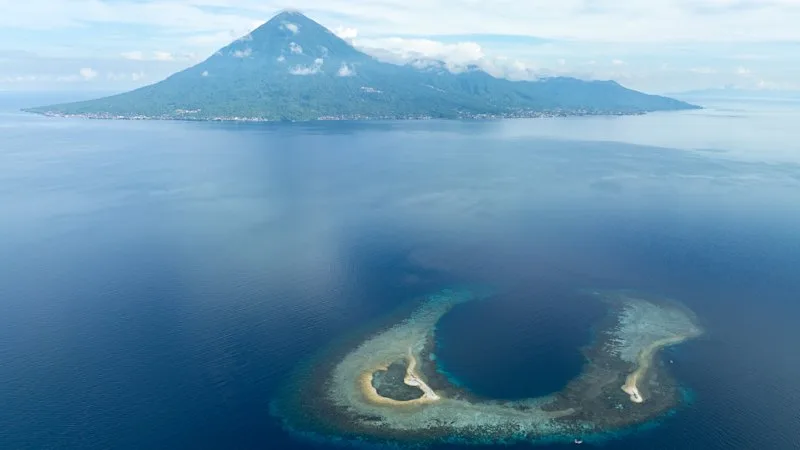
From above, Ternate is a mere pinprick in the more than 1000-island strong Indonesian archipelago of Maluku. But, in its own way, this place has helped shape the world as we know it today.
The aroma of nutmeg and cloves here has been largely replaced by the exhaust fumes of countless motor scooters, but the precious spices still grow in the island’s forests – spices that enticed Arab, Persian and Indian traders to this remote part of the world more than a thousand years ago.
Five hundred years later, the Portuguese, Spanish and Dutch would fight for control of the archipelago, though today the only real disturbances on Ternate come from Mount Gamalama, the volcano towering above the island which still lends it an impossibly exotic air.
“Is it alive?” I’d ask a local soon after my arrival. “It smokes in the morning and at night,” he says, putting two fingers to his mouth to mime a drag on a cigarette. That evening a wisp of smoke curled up from Gamalama’s lip.
I find myself in Ternate, 3347 kilometres east of Jakarta, as a guest aboard a 14-day, 13-night adventure cruise dubbed “Maluku & Sulawesi: Rare Species, Cultures & Corals”. Operated by On Water Expeditions, a division of the Australian-based World Expeditions group, I’m sailing aboard Ombak Putih, a 42-metre twin-masted schooner or phinisi, as the traditional coastal traders of seafaring Sulawesi, Indonesia’s fourth-largest island, are known. The vessel comfortably accommodates 24 passengers in 12 en-suite cabins, all of which are, thankfully, equipped with air-conditioning.
Get exclusive travel deals delivered straight to your inbox. Sign up now.
Back on the island, an abundance of spices isn’t this region’s only claim to notoriety. There are those who believe that the greatest single idea ever to have fizzed into a human mind was first described in a little house on a side street of Ternate, the island’s small but seething eponymous city.
It was in 1858, inside a building that today houses a pet shop, that Alfred Russel Wallace, a self-taught Welsh naturalist, wrote his famous 1858 essay on evolution by natural selection. Wallace laid out his theory that earthly species evolved into their glorious variety via a competitive mechanism he called the “natural means of selection”.
He was at the time four years into an eight-year scientific expedition across the waters in which the Ombak Putih is sailing. Of course, the same theory had occurred to Charles Darwin 20 years earlier, after his celebrated voyage on HMS Beagle. But Darwin – doubtless concerned he may have inadvertently challenged the existence of a god responsible for the creation of all creatures great and small – had conveyed his theory only to trusted confidants, consigning his notes to a desk drawer.
Still intending to publish, Darwin was appalled to receive what became known as the “Letter from Ternate” from Wallace, detailing the same theory in startling detail. Nonetheless, Darwin bundled Wallace’s essay with sections of his own treatise and had the papers published together, effectively rendering the pair co-discoverers.
5News aggregated this summary from the outlet’s public feed. The full article, with all the context, is on www.theage.com.au — the content belongs to The Age - Home.