Critica bolsters ranks for dual critical minerals push
Critica has beefed up its project development personnel with the appointment of experienced minerals engineer Mike Kevan as interim study manager, signalling its evolution from explorer to developer as it pushes ahead with two major scoping studies.
The fresh appointment is aimed at strengthening the company’s technical capability as it progresses parallel studies on two wholly owned flagship assets, namely the Mt Lindsay tin-tungsten project in Tasmania and the Jupiter rare earths project in Western Australia.
Critica’s portfolio, covering rare earths, yttrium, gallium, tin and tungsten, aligns squarely with materials deemed essential for a wide range of modern applications across diverse fields, including defence, electronics, semiconductors, artificial intelligence and the green energy transition.
Mr Kevan is a minerals engineer with more than 25 years of experience in mineral processing, engineering leadership and project development across a suite of commodities, including critical minerals, iron ore and base metals. His role will be to support Critica’s technical personnel and external consultants as it pushes ahead with the two studies.
The company says the appointment is interim and has kicked off a formal recruitment process to fill a permanent, full-time general manager role for its projects.
Critica Limited chief executive officer Jacob Deysel said: “We are advancing two significant Scoping Studies in parallel across Mt Lindsay and Jupiter as we continue to build Critica into a leading Australian critical minerals developer. As these projects mature, we are strengthening our project development team and the systems, governance and technical integration required to support their progression through the next stages of development.”
The scoping study at Mt Lindsay is pushing ahead with a first-principles revamp of what is considered one of Australia’s biggest undeveloped tin-tungsten projects.
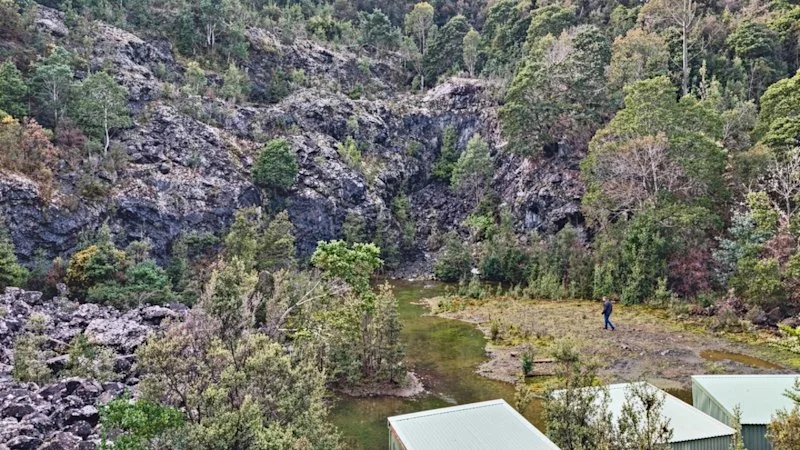
The new design envisages a modern underground development concept, integrating mining, processing, infrastructure and environmental considerations to minimise its surface footprint and disturbance. The blueprint includes a proposal to use an old Hydro-Electric Commission quarry for its portal location. The portal configuration remains subject to ongoing engineering, environmental assessment and regulatory approvals.
The project hosts an estimated resource of 81,000 tonnes of tin and 3.2 million metric tonne units of tungsten trioxide, equivalent to around 32,000 tonnes of tungsten metal.
Simultaneously, Critica is progressing its scoping study for the Jupiter project, near Mt Magnet in WA, which it describes as Australia’s largest clay-hosted rare earths resource, currently sitting at a whopping 1.8 billion tonnes.
The Jupiter study incorporates the results of its recent metallurgical optimisation work, which the company says has improved beneficiation performance, concentrate grade and hydrometallurgical outcomes.
5News aggregated this summary from the outlet’s public feed. The full article, with all the context, is on www.brisbanetimes.com.au — the content belongs to Brisbane Times.