Need a tow? SpaceX rocket taken to Christmas Island after splashdown
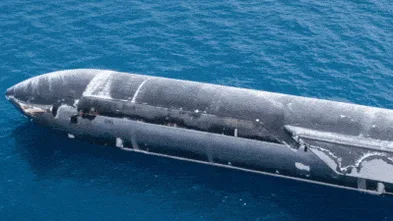
The towing of a massive SpaceX rocket from the sea to Christmas Island has caused a stir among locals, as it was dragged slowly along the coast of the remote Australian territory on Tuesday morning.
The recovery effort was co-ordinated by the Australian Space Agency after SpaceX – owned by world’s richest man Elon Musk – faced difficulties retrieving the 52-metre-long spacecraft which had sat in the Indian Ocean for almost a month. Photos of the rocket being towed by two large ships, taken by photographer Chris Bray and posted on Instagram, went instantly viral across space-loving corners of the internet.
“A floating spaceship? Not something I ever expected to see,” Bray wrote in a post .
Although an exclusion zone was in place to prevent local vessels getting too close, Christmas Island Tourism Association chair David Watchorn said the rocket was an incredible draw.
“The boats out were super excited, you could see quite a number of vessels being launched off the boat around this morning to go and have a look,” he told ABC News .
Ship 40 was launched from Texas on July 24, as part of SpaceX Flight 13. Around 16 minutes after launch, it achieved a major milestone for the company by successfully deploying an operational payload – in this case 20 Starlink V3 satellites – into a suborbital trajectory. Around an hour after launch, it guided itself to a soft, intact landing in the Indian Ocean.
But by August 8, SpaceX was still trying to recover its rocket from international waters.
“The SpaceX Recovery team is still working to recover Flight 13’s Starship from the Indian Ocean,” it wrote in a post at the time.
“They’ve been overcoming challenging conditions and increasingly rough seas as they attempt to guide the 52-metre-long spacecraft to port”.
The number of objects launched into space has increased astronomically in recent years, overwhelmingly from the USA. Several tech giants and other companies are placing constellations of small satellites in orbit around the planet, and one space startup was recently given permission to test its giant orbital mirrors, which would let companies pay to have sunlight redirected to certain areas of the US during night time.
Yet while most launches result in some kind of space junk falling to Earth (or hitting the moon, as in one recent SpaceX event), Ship 40 is an unusual case of a rocket splashing down intact, potentially to be reused in future missions.
5News aggregated this summary from the outlet’s public feed. The full article, with all the context, is on www.brisbanetimes.com.au — the content belongs to Brisbane Times.