Caught in a car in a flood? Don’t believe what you see on TV
Each week , Good Weekend ’s how-to column shares expert advice on how to navigate some of modern life’s big – and small – challenges. This week: How to get out of a car in floodwater.
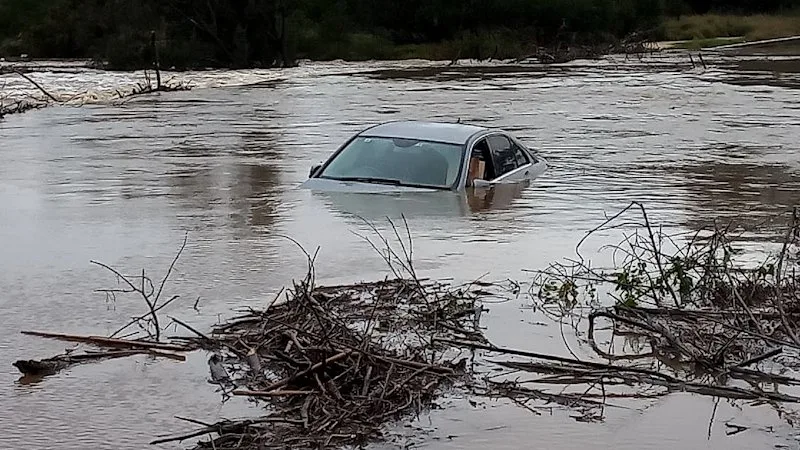
If you’re a fan of action movies, you may think that the celluloid version of a car being submerged in water – after flying off a pier in slo-mo, or somersaulting off a bridge during a high-octane shootout – reflects what happens in real life. But, in reality, you’re far more likely to find your vehicle trapped in water in the context of a flood. “ At least half the drowning deaths that happen in floods are vehicle-related ,” says Dr Amy Peden, a drowning prevention researcher at UNSW. “A lot of people have this misconception that your car has to be fully submerged for drowning to occur.”
While Peden’s primary piece of advice is to avoid floodwater at all costs , she acknowledges that it’s not always a question of choice: fatal floods, which Peden says are increasing due to climate change , can often come out of nowhere. “Moving water is conceptually hard to comprehend,” she says. “It’s very difficult for most of us to assess water depth and velocity.”
Fifteen to 20 centimetres of water are sufficient to float a car: “Once it’s under all four wheels, you’ve lost contact with the road and control of your vehicle,” she says. This is where things can get gnarly. Conventional wisdom would say this is the point at which you dial for help, but this prioritising could push you further into dire straits. “That time is probably better spent trying to get on top of the vehicle, into a tree or to the riverbank,” Peden says. “Emergency services will likely be inundated with other calls; you might not even have a signal.”
How you exit the car is vitally important. Electric windows will stop working within a minute of water reaching the switches. “Everyone should have [a glass breaker] in their car,” Peden says (these are inexpensive and available online: some models helpfully include a seatbelt cutter).
Use it to smash a side window (not the windshield or rear window) by hitting it very hard at any one of its four corners. Complete the action-hero manoeuvre by escaping through it quickly: vehicles can go from floating to fully submerged in seconds.
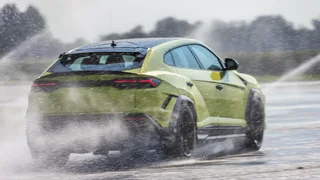
Never open a door, particularly if you’re in deeper water: “You want to avoid, as much as possible, filling the car with water and speeding up the sinking process,” says Peden. And don’t believe what you see on TV, where commercials can glorify the ability of a vehicle to make it through floodwaters.
“People overestimate the ability of their vehicle to go through water because they’ve seen it in an ad,” she says. “The party line really is, ‘If it’s flooded, forget it.’ ”
5News aggregated this summary from the outlet’s public feed. The full article, with all the context, is on www.brisbanetimes.com.au — the content belongs to Brisbane Times.