Whale feeding a delight for both tourism and science
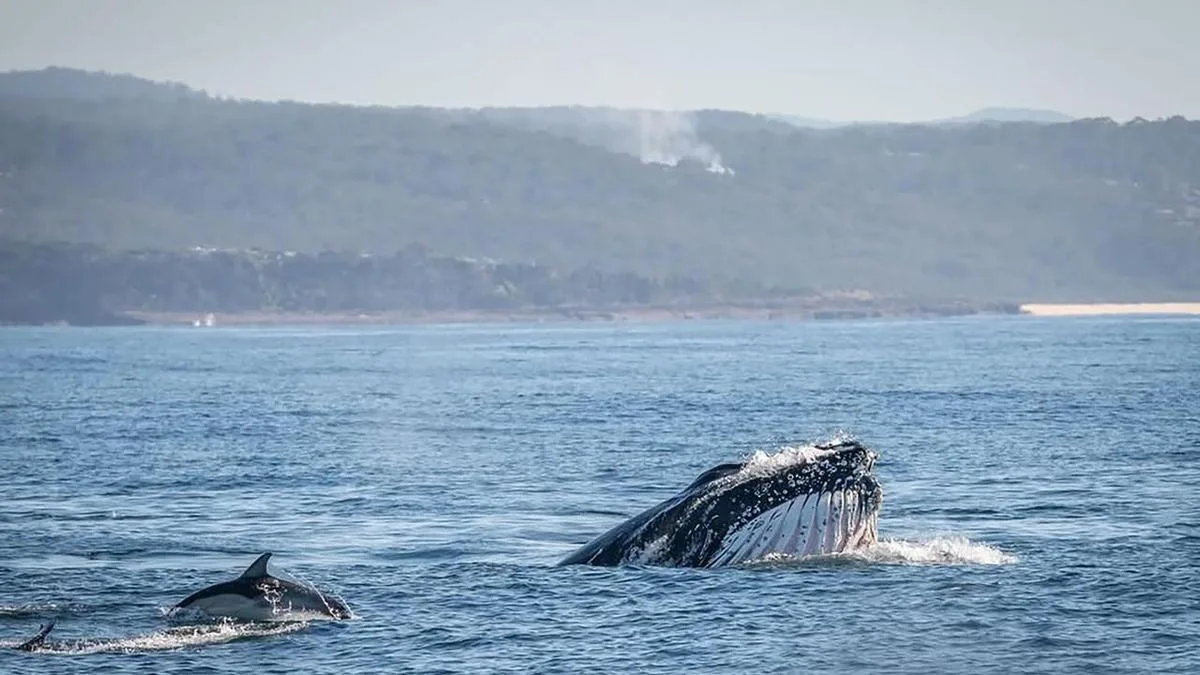
Humpback whales treat Australia as a "swim thru", with research finding the ocean giants like to stop off for a snack during their breeding journey.
It used to be thought humpback whales would only load up on food in Antarctica and then fast as they travelled along the Australian coast to warmer waters for breeding.
But Griffith University research done in collaboration with whale-watching tourism businesses has confirmed that a humpback's diet might allow for some snacking in Australian waters, particularly on their southbound return.
PhD candidate Sarah McCulloch has previously been on the other side of the partnership, when she worked on a whale-watching boat.
She has investigated the feeding patterns of humpback whales as they migrate between their Antarctic home and tropical breeding areas.
"A lot of people do say feeding only occurs in Antarctica, we're seeing actually it's happening relatively often within Australian waters," Ms McCulloch told AAP.
"If they happen to come across say a large bait ball or on occasion there's coastal krill, they might stop and have a feed."
The PhD candidate said whales had been feeding off the coast of southern NSW, Tasmania and Victoria.
To collect data across such a large geographic area would have been near-impossible without a huge citizen science effort.
More than 50 tourism operators took photos and videos and recorded observations to support the project.
"Being able to combine the sort of rigorous side of science with the anecdotal side of the trends that people are out there seeing, you can work together to find a nice little happy medium," the Queensland-based scientist said.
"The tourism operators that are out there every day, they have a great understanding of what's actually going on with that population.
"One of the coolest things is seeing how the everyday person can take a recording of a whale feeding and it can be used to potentially inform management decisions.
5News aggregated this summary from the outlet’s public feed. The full article, with all the context, is on www.perthnow.com.au — the content belongs to PerthNow.