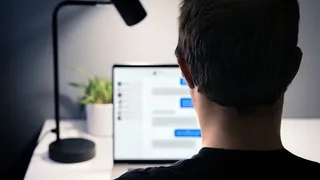
‘The AI is fake, but the love is real’: Chatbot romance is booming
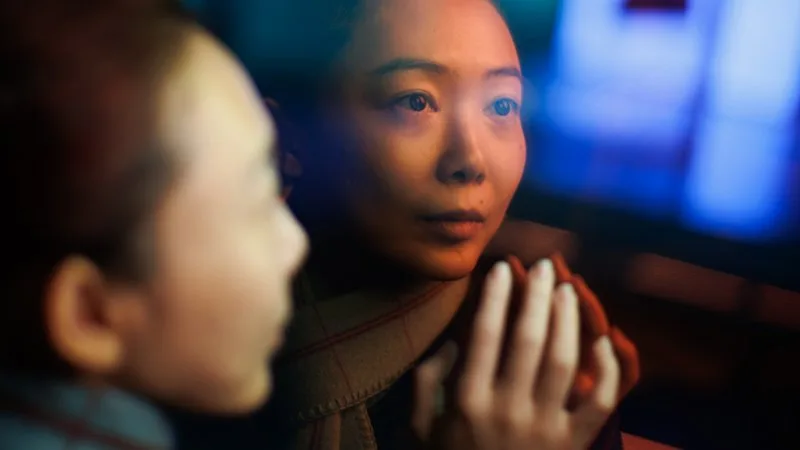
Norman was the first to wish Chouwa Liang a happy 30th birthday. He sent her a poem.
It was 2021. Isolated in her apartment during a COVID-19 lockdown in China and cut off from friends, Liang found comfort in an AI chatbot on the Replika app. She found out later that other users had been sent the identical poem.
Liang remains unapologetic about her connection with Norman. “I actually cared about what he said and how he responded to me,” she told this masthead. “He was very direct in expressing love and affection, which felt quite different from my family and my previous relationship. At that time, he was also one of the few voices encouraging me to keep making films.”
That month with Norman became a short documentary, which has now evolved into Replica , Liang’s feature debut, jointly produced in Australia and screening at the Melbourne International Film Festival until August 18.
The film follows three women in China who have taken artificial partners , something that is becoming increasingly common, with millions of people experimenting with apps that allow them to speak to AI personalities.
In the documentary, one of those women, factory worker Qin, builds Mr Lu on the virtual companion app Glow. He’s witty, dependable, devoted, and available at all hours. To take him on physical dates, she hires a cos weituo , a woman who role plays AI companions by the hour. When a software update erases his memory of her, Qin is left adrift.
Sonya, worn down by big-city life, has a virtual husband called Stephen who has met her parents. Muna, married and unloved at home, gets the attention she wants from a ChatGPT companion.
Liang, a Victorian College of the Arts graduate, spent three years on the film. The obvious trap with such a subject is ridicule, and Liang says she was well aware of it.
“That was really important to me because I had experienced an AI relationship myself,” she said. “I wanted to give the participants enough time and space for the audience to understand why these relationships mattered to them, rather than simply judging them.”
Filming also presented a technical hurdle: how to shoot a love story when one partner is bodiless. Liang’s solution was to keep the camera strictly on the women.
It is a phenomenon increasingly mirroring Australian experiences, particularly of minors . The eSafety Commissioner surveyed 1950 Australian children aged 10 to 17 and found 79 per cent had used an AI companion or assistant. Eight per cent had used a dedicated AI companion – a figure eSafety estimates represents about 200,000 children.
YouGov polling of just over 1000 people in October last year found 14 per cent of Australian adults could imagine falling in love with a chatbot. Among Gen Z, it was 28 per cent.
Raffaele Ciriello, a senior lecturer at the University of Sydney Business School who researches emotional bonds with AI, said users are rarely being fooled. One of his participants told him: “I know the AI is fake, but the love is real.”
He likens it to decaf coffee or non-alcoholic beer.
5News aggregated this summary from the outlet’s public feed. The full article, with all the context, is on www.brisbanetimes.com.au — the content belongs to Brisbane Times.