This ‘AI refuser’ quit her dream job, and hopes others follow
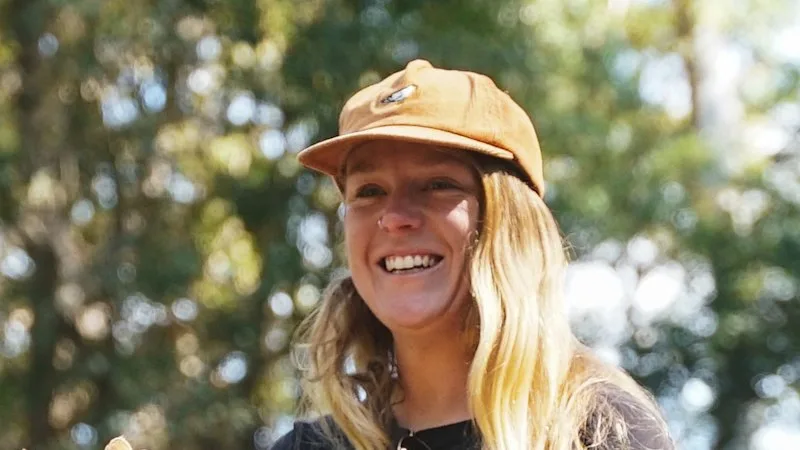
Gabrielle Boyle resigned from the AFL three days before Microsoft’s AI assistant was switched on throughout the organisation.
She had asked whether she could opt out. The AFL told her, in writing, that she could not.
“You do not have a right to request that your work not be accessed by our AI systems,” the code’s HR executive Ciara Gilchrist wrote to her on June 23 according to documents seen by this masthead.
Boyle sent her resignation on June 26. Microsoft’s Copilot went live on June 29.
From her Coffs Harbour base, Boyle was the AFL’s participation manager for northern NSW, responsible for getting five to 12-year-olds to play football in the Hunter region, the North Coast and the central and north-west. She describes herself as an AI refuser who will not use ChatGPT, Copilot or any other large language model.
Her objections run from the immediate to the apocalyptic: the water and power consumed by data centres, what the technology is doing to people’s capacity to think, and research suggesting advanced AI could pose a risk of human extinction.
Boyle is an outlier, and knows it. She no longer owns a smartphone, has deleted her social media accounts and now lives in a converted Toyota 4WD.
The AFL’s refusal to allow Boyle a choice is not unlawful. Employers in Australia can install software on the equipment they own, are exempt from privacy law when handling employee records, and generally own whatever their staff produce. Most workers accept AI at work, or accept that they have no realistic way to avoid it.
Boyle’s case, illustrating how far someone has to go if they really don’t want to use the technology, is also early test of a new feature of many Australian workplaces.
As employers embed AI into the systems their staff use daily, often at short notice and with no option to decline, the law has not caught up. In a recent survey of Australian Services Union members, who often work in clerical roles, more than half were not aware their employer had an AI policy at all.
Boyle’s departure caps a four-month exchange with the AFL, documented in emails seen by this masthead, that began with an internal staff survey.
About 35 per cent of AFL staff said in a survey last year that they were not comfortable with AI being adopted in the workplace.
Boyle raised her concerns at an executive roadshow when the leadership team, including chief executive Andrew Dillon, visited Coffs Harbour on March 5. She asked what the AFL’s position on AI was and whether a policy would arrive to protect data and jobs.
Bec Haagsma, the AFL’s executive general manager customer, commercial and technology, fielded the question and spoke positively about AI’s potential to improve both the elite game and the AFL’s administration. Boyle says about eight colleagues thanked her for speaking up when she got back to the office.
5News aggregated this summary from the outlet’s public feed. The full article, with all the context, is on www.brisbanetimes.com.au — the content belongs to Brisbane Times.