An ageing Australia must find ways to pay for world reshaped by AI, climate change
Long-range forecasts by the federal government predict sweeping changes to Australia over the next 40 years driven by AI and the energy transition as the population ages and geopolitical fragmentation continues, but debt and deficit could spiral if productivity woes continue.
The three-yearly Intergenerational Report, which gauges how economic and demographic trends will shape the nation and its finances over the next 40 years, flags four decades of accelerating “remarkable change”.
Australia’s population will age more quickly and grow more slowly than previously expected due mostly to a lower number of births per woman.
The population aged 85 and over is projected to treble to 1.9 million by 2066, putting additional pressure on the budget.
The report forecasts the federal budget be in deficit by 0.3 per cent of gross domestic product until 2036–37, which will then widen over the long term to reach 1.8 per cent of GDP in 2065–66.
Gross federal debt as a share of GDP is projected to decline from 33.1 per cent of GDP in 2025–26 to a low of 22.2 per cent of GDP in the mid-2050s.
But this burden would grow to more than half the size of the economy, and deficits would blow out if not for relatively rosy productivity growth assumptions which have been challenged by some economists.
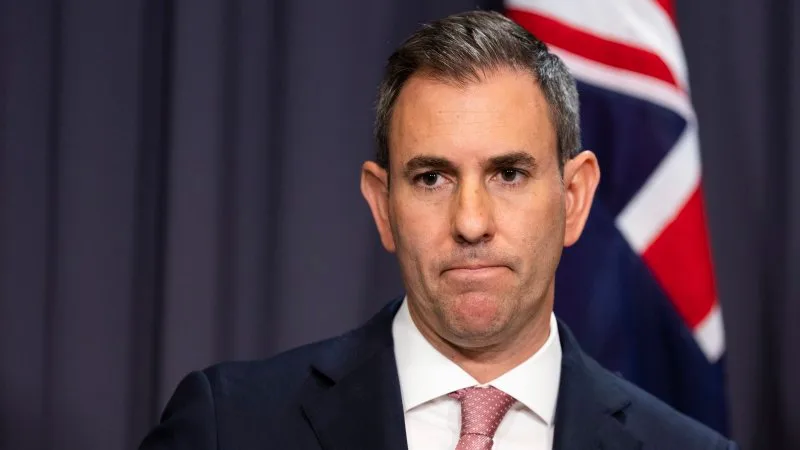
The opposition has described the IGR’s forecast of 1.2 per cent long-run productivity growth as an attempt by Treasurer Jim Chalmers to “cook the books”. Productivity has grown at an average of 0.8 per cent over the past 20 years. But the government has reverted from the 20-year average adopted in 2022 to the 30-year average of 1.2 per cent, even though Chalmers described the Morrison government’s use of a 20-year average as “rubbish”.
Labor elder Bill Kelty has joined economists in urging Labor to reduce the burden on younger wage-earners by lowering income taxes and finding other ways to draw revenue. As revenue from the tobacco excise collapses, some economists and Coalition frontbencher Andrew Bragg have urged Labor to look at raising indirect taxes such as the the GST.
The report released on Monday states: “Without further reform, fiscal pressures from an ageing population and trends in the tax base will add to pressures on working-age Australians. Salary and wages are the largest source of taxable personal income. Indirect taxes are projected to keep declining, which will increase the share of tax receipts from personal income taxes.“
The report identifies four “transformations” that will intensify in coming decades and have profound implications for Australia’s economy and society. These are:
The report says the economic and social implications of AI for Australia are “profound”, although this will depend on the evolution of the technology and how broadly AI is adopted. Australia is well positioned to benefit from the global AI revolution, given our stable institutions, abundant renewable energy potential and well-developed international connectivity, including in the Indo-Pacific region.
Conflict and competition between countries is intensifying, the report warns.
5News aggregated this summary from the outlet’s public feed. The full article, with all the context, is on www.theage.com.au — the content belongs to The Age - Home.