‘It’s really debilitating’: The hidden danger in your daily screen time driving a surge in disease
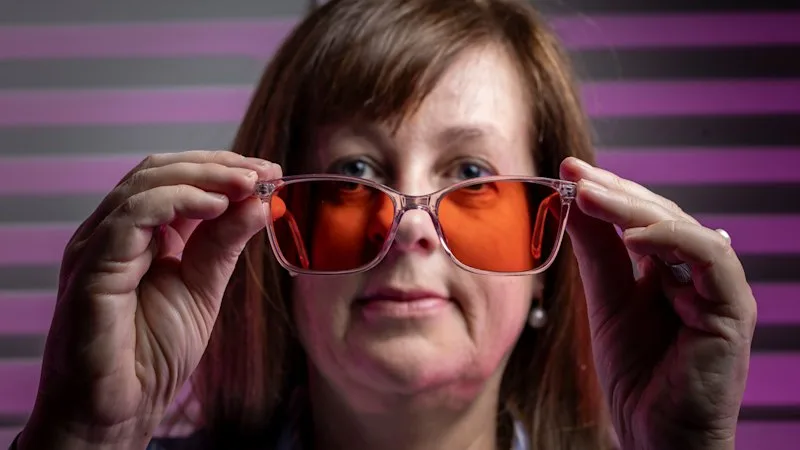
It’s not easy avoiding screens in 2026, but Sonia Robertson says she has no choice.
The 59-year-old suffers from dry eye disease, a painful and debilitating condition often triggered or exacerbated by device use.
“It’s very frustrating emotionally because so much of what we do is on a screen,” she said. “All of our banking, all our entertainment and streaming.”
Robertson is among a growing number of Australians living with the condition, which is now estimated to affect about 85 per cent of the population at some point in their lives, up from about 7 per cent 30 years ago.
A surge in dry eye cases has triggered a boom in specialty clinics nationwide, many of which have lengthy waiting lists.
Optometrists attribute the demand to an uptick of screen use during and following the pandemic, which has drastically reduced how often we blink.
Jason Holland, a Brisbane-based optometrist who is the president and co-founder of the recently formed Dry Eye Society, said people blinked 12 to 15 times a minute if they were reading a book or talking to someone. This dropped to five to six times a minute when they were on devices.
Blinking less frequently, or only partially closing our eyes when we blink, traps this oil, causing dry, irritated eyes.
While the condition previously used to impact mainly older people, Holland said he was now treating patients as young as 17 with dry eyes linked to screen use. Patients face a five- to eight-week wait to access his dry eye clinic due to the demand.
“It is really debilitating,” he said. “I have patients who break down ... They have had to give up work because of the condition. It has a huge impact.”
Australian College of Optometry Eye Health, Victoria’s only public health optometry provider, has treated 1000 patients at its dry eye clinic since it opened just four years ago. It’s grappling with a growing waiting list.
Varny Ganesalingam, the college’s manager of dry eye services, said as well as extended screen use, the condition was linked to ageing, windy or dry weather, air-conditioning, some medications and health conditions. It is more common among women.
She said eyes needed a smooth, stable surface to seamlessly interact with incoming light.
“If you have a disrupted ocular surface, you’re getting an uneven pathway of light,” said Ganesalingam.
5News aggregated this summary from the outlet’s public feed. The full article, with all the context, is on www.brisbanetimes.com.au — the content belongs to Brisbane Times.