Refugees must not be judged as a cost item in a balance sheet
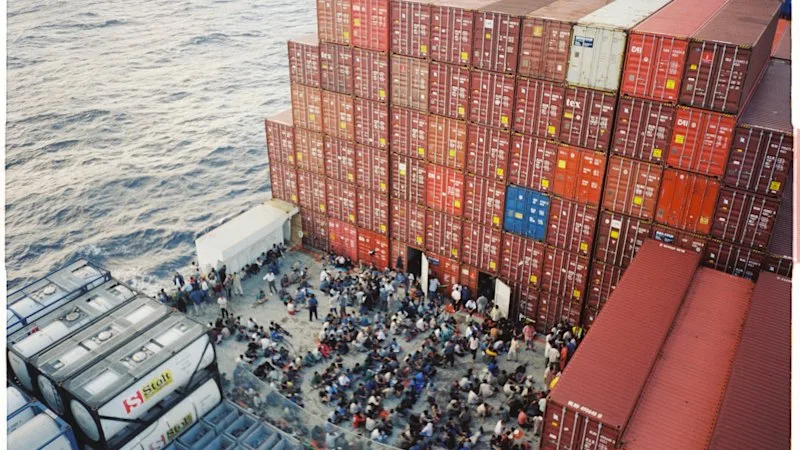
No spreadsheet could capture how it felt to be one of the 150 Hazara men, women and children stepping down onto the deck of the Norwegian cargo boat MV Tampa in 2001, after their rapidly sinking refugee boat was rescued in the middle of the Indian Ocean .
The image of Australian soldiers helping them to take a leap of faith is seared into my memory still now, 25 years later.
No accountant’s ledger can measure the relief those families who came so close to safety on our shores felt when they were offered a new home in New Zealand.
But if their story was to be reduced to dollar figures, they would have more than paid their new country back. The boys and girls from those families who grew up in Auckland studied hard, went into professions, learned trades, raised families and contributed to the country that gave them a home. They were the children Australia rejected and New Zealand welcomed.
At the time, decision makers in Australia determined the cost in political complications of allowing them to settle here was simply too high. One of those at the helm was then-foreign affairs minister Alexander Downer, who argued last week that Australia’s legal and moral obligation to refugees should be temporary because of their negative lifetime fiscal contribution.
But his logic would also see us deprioritise the average Australian newborn, who enters this world with a negative lifetime fiscal impact, too.
Yet no sane government would reduce an Australian child to a line-item liability or measure their value by their predicted lifetime tax contributions – because we instinctively understand that a nation’s soul and its future strength also can’t be tapped into an accountant’s desktop calculator.
Downer went on to argue that “we do not have an obligation to settle refugees permanently as migrants in our country. Our obligation is to protect them from whoever they are fleeing, not to turn them into migrants”.
I disagree. Resettlement is an act of nation building, firmly planted in our proudest traditions. Australia was one of eight nations that helped draft the Universal Declaration of Human Rights in 1948 and played a leading role in establishing the 1951 Refugee Convention .
We should not become a country that sees our responsibility as ending at temporary shelter rather than extending to the possibility of permanent belonging. Because to do so overlooks an economic irony: Australia did not avoid a negative fiscal contribution by turning those children away on the Tampa - we turned away future civil engineers, health professionals, tradespeople and loyal taxpayers to contribute to New Zealand at zero cost to Wellington.
In recent weeks, we have seen voices from across politics argue over whether Australia should cut its humanitarian intake or maintain it at 20,000 places. What has often been missing from that debate is an understanding that humanitarian resettlement is a distinct, human-rights response to persecution and conflict.
That does not mean economics is irrelevant. Refugees work, pay taxes, start businesses, raise families and contribute to their communities, just as generations of humanitarian entrants have done before them.
5News aggregated this summary from the outlet’s public feed. The full article, with all the context, is on www.watoday.com.au — the content belongs to WAtoday.