The big question underpinning Australian political defections
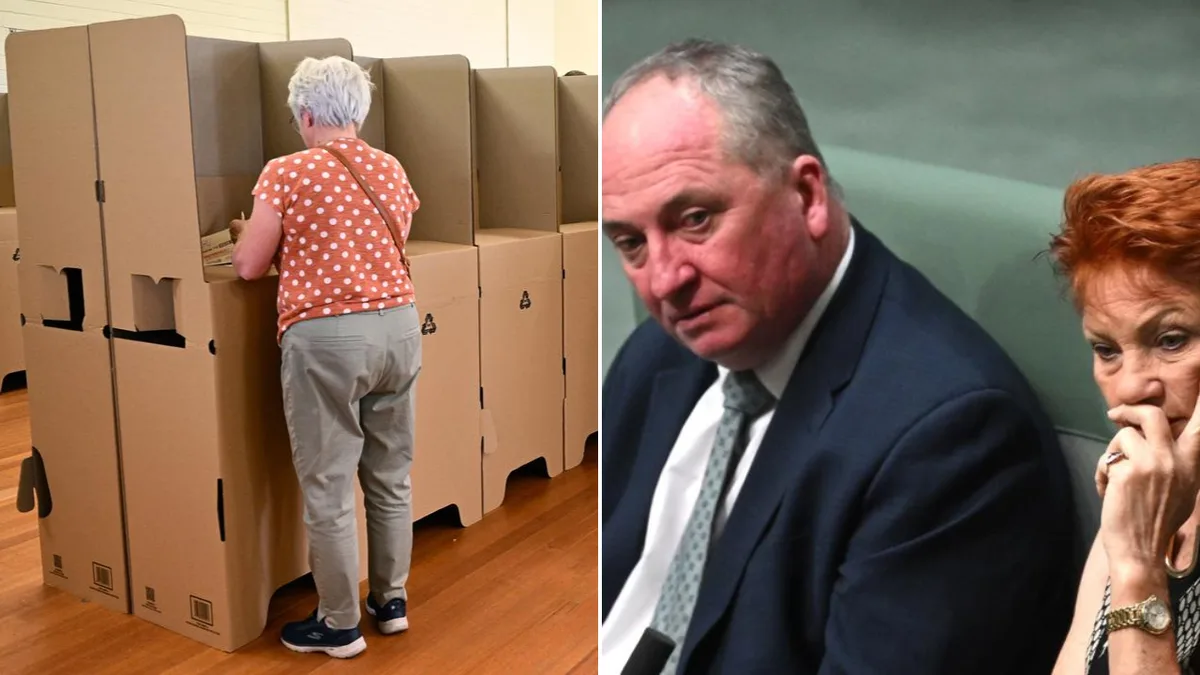
When Australians cast their vote at a federal election, what exactly are they choosing? A person to represent their local community? A political party and its policies? Or some combination of the two?
The question has come sharply into focus as Australian politicians continue to leave, join and be expelled from political parties, while retaining the parliamentary seats they were elected to hold.
Fatima Payman left Labor in 2024 after breaking with the party over its position on Gaza, while Lidia Thorpe quit the Greens in 2023 citing differences over how the party approached Indigenous issues.
Barnaby Joyce’s move from the Nationals to One Nation is the latest high-profile example, with the former Nationals leader retaining his seat as the member for New England despite leaving the party.
So if an MP was elected under one party banner, should they be able to walk away from it without facing the voters again?
Under Australia’s current constitutional arrangements, changing political allegiance does not automatically mean losing a parliamentary seat, constitutional expert Professor Anne Twomey told 7NEWS.com.au.
An MP can leave their party, join another party or be expelled from a party and still remain in parliament.
They only cease to hold the seat in circumstances such as resignation, death or disqualification.
Twomey said there was a strong constitutional basis for treating MPs as individuals with responsibilities to their electorates, rather than simply representatives bound to their parties.
“There’s authority, stuff from the High Court from earlier cases where they’ve held that it’s the duty of an MP to serve the public according to their best judgement and conscience and act with single-mindedness for the welfare of the community,” she said.
That principle means an MP cannot simply be compelled by their party to vote in a particular way.
While the constitutional position may be relatively straightforward, the democratic question is much more complicated.
When voters walk into a polling booth, they may not be thinking about the individual candidate at all.
“When you elect someone in the lower house, you’re probably doing (one of) two things,” Twomey said.
5News aggregated this summary from the outlet’s public feed. The full article, with all the context, is on 7news.com.au — the content belongs to 7NEWS Australia.