BC Needs Commitments on Distant Carbon Capture Promises
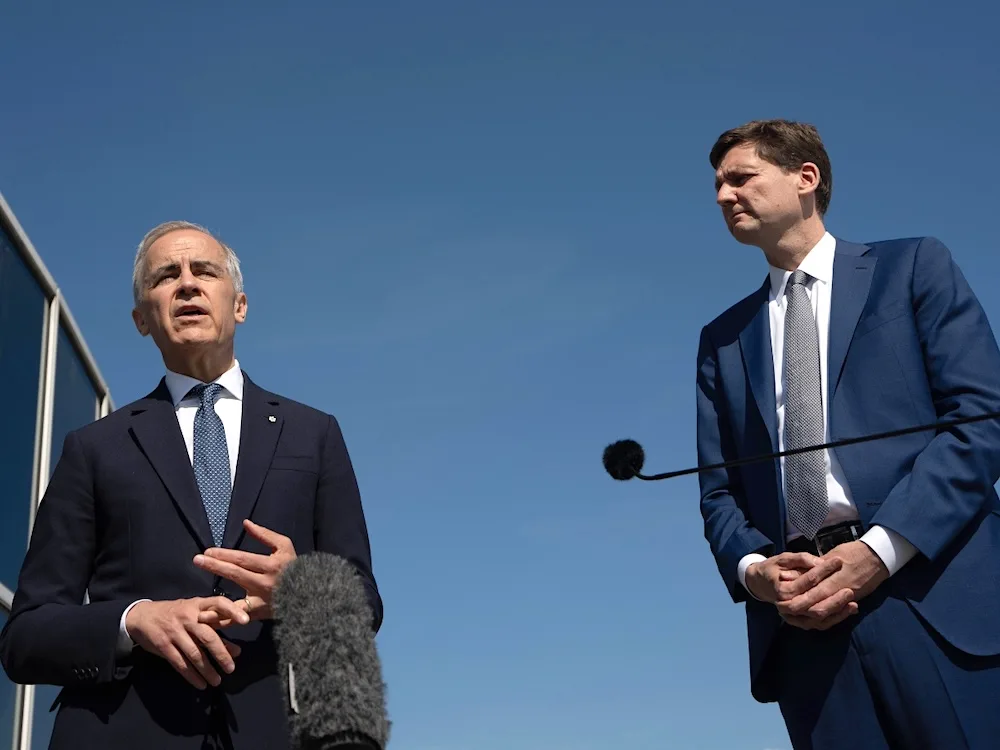
On July 2, the governments of British Columbia and Canada announced a memorandum of understanding that provided the framework by which a new oil pipeline to the West Coast will be built.
It is just one of a series of pieces of an increasingly complex web of commitments, agreements and political rhetoric between Canada, Alberta, British Columbia and major oil producers.
But approval for the West Coast oil pipeline at the centre of the deal between Canada and B.C. is not unconditional. Three separate agreements share a key premise: the pipeline cannot proceed without a carbon capture and storage project. What is not shared is a timeline. British Columbia accepts the pipeline risks now. Alberta and the oil industry are committed only to work toward carbon capture on a schedule stretching to 2045.
In my last piece , I shared my experience in meeting with the newly formed Major Projects Office. The office is the federal government’s concierge service for major projects navigating the Building Canada Act process . They are the chauffeur in a black car service tasked with getting projects their inevitable “national interest” designation and developing conditions that must be met for the projects to be built.
The Canada-B.C. agreement is heavy on promises of future negotiation through a bilateral “Implementation Committee.” While it explicitly maintains the North Coast tanker ban and offers a $3-billion federal bailout for the BC NDP’s beleaguered George Massey Tunnel replacement project, many of the other details are vague, or to be worked out later. One point is clear, though: British Columbia acknowledges that the one project is “dependent” on the other.
Premier David Eby has promised that British Columbians will provide certainty for a new million-barrel oil pipeline to the south coast. Doing so accepts the immediate and indefinite risks of a pipeline to our fragile coastline long before Alberta has proven it can deliver on the reversible half of the bargain — namely the Pathways Project, which isn’t slated to be fully operational for nearly two decades.
The November 2025 memorandum of understanding between Alberta and Canada states that both governments “agree that the Pathways Project is also a prerequisite to the approval, commencement and continued construction of the bitumen pipeline, given that the two projects referred to in this MOU are mutually dependent.”
The asymmetry is obvious. Under the dark cloud of Alberta’s threat to leave Canada, British Columbians are forced to accept another taxpayer-funded pipeline proposal by this October. Meanwhile, Alberta doesn’t have to prove the prerequisite carbon capture and sequestration project is viable until long after the construction starts on the pipeline and damage in British Columbia is already done.
The B.C.-Canada deal explicitly acknowledges that Canada’s agreement with Alberta lacks any real enforcement mechanism to ensure the Pathways carbon capture and sequestration project is actually built.
The national-interest designation and project conditions on the oil pipeline will be set within the next year.
5News aggregated this summary from the outlet’s public feed. The full article, with all the context, is on thetyee.ca — the content belongs to The Tyee.