From folk rock to fundamental research: Dupras leads Quebec science
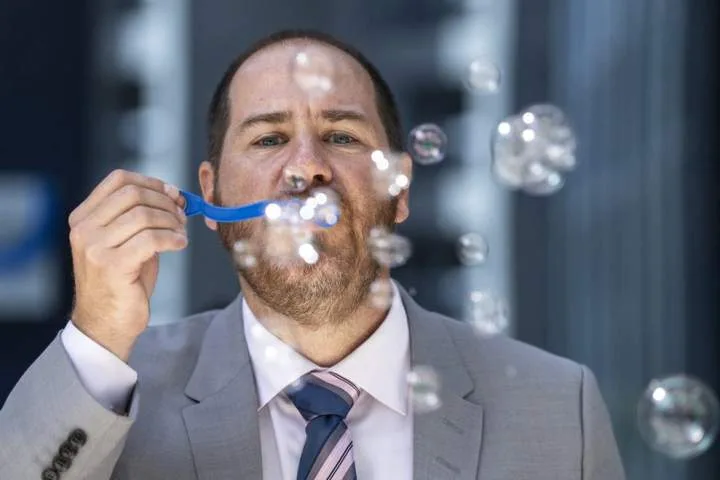
Jérôme Dupras spent much of his twenties on the road, playing bass guitar across Quebec and beyond.
In 1997, he joined a band with friends. That summer, the folk rock group anonymously released 500 cassettes of its first album. Over the next few years, it would become Les Cowboys Fringants, one of Quebec’s most popular musical acts.
Their songs tell stories about Quebec and its people, mixing humour and nostalgia with a critical look at society.
“(Touring) made me love music, but also really love Quebec, and want to talk about it elsewhere in the world,” Dupras said in an interview.
All the while, he pursued a second career in science, studying biochemistry and eventually becoming a researcher specializing in biodiversity and ecological economics. He became Quebec’s chief scientist in June, tasked with advising the government and championing research in an era of disinformation.
Now, as Quebecers prepare to elect a new government this fall, Dupras faces a challenge that brings his two sides as a musician and scientist together.
His ability to communicate beyond the scientific community could prove particularly valuable in his new job, according to members of Quebec’s research community.
One of Les Cowboys Fringants’ songs, “Plus rien,” which translates to “nothing left,” imagines a future devastated by climate change, while “8 secondes” takes aim at overconsumption and the environmental cost of modern life. Other songs explore inequality and Quebec identity — and an attachment to a place they worried was changing.
Luc-Alain Giraldeau, director general of the Institut national de la recherche scientifique, a Quebec university institution devoted to research and graduate education, said Dupras “combines scientific rigour and creativity.”
His scientific credibility and ability to reach a broad public are “an undeniable asset,” Giraldeau said, particularly at a time when disinformation is gaining ground worldwide.
Sophie Montreuil, executive director of the Association francophone pour le savoir, a Canadian organization based in Montreal that promotes French-language science and research, called Dupras’s unusual background “a great strength.”
The bassist succeeded Rémi Quirion, who held the chief scientist position since it was created in 2011.
Dupras says Quebec is at an “important crossroads,” and that its position as a research leader cannot be taken for granted.
As chief scientist and head of the Fonds de recherche du Québec, Dupras must remain politically neutral. But he is watching the election closely: “I’m curious to see what place innovation, research and science will have.”
5News aggregated this summary from the outlet’s public feed. The full article, with all the context, is on globalnews.ca — the content belongs to Global News Canada.