Top adviser to Iran's IRGC says U.S. military is 'weaker than what we perceived' in rare interview
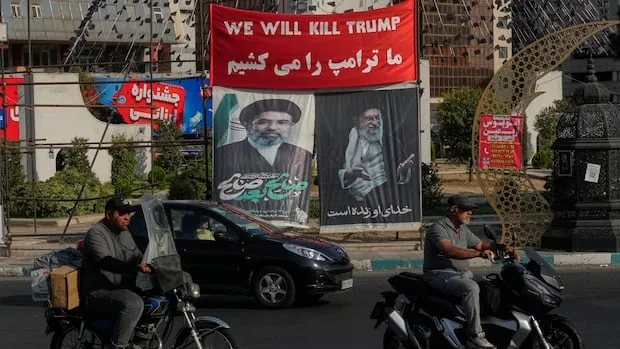
A top adviser to Iran's Islamic Revolutionary Guard Corps (IRGC) says Iranian officials have seen "how the American military is weaker than what we perceived" since the United States and Israel first launched their attack on Iran in February of this year, as talks to end the fighting continue to stall.
In a rare IRGC interview with Western media, Brig.-Gen. Mohammad Reza Naqdi told PBS News Hour in an interview aired Tuesday that Iran has not reached their "final objective" when asked if they have won the war.
"Up until now, we are victorious. In the future, we will continue to be victorious," said Naqdi, who is supreme adviser to IRGC's commander-in-chief.
An interim deal between Washington and Tehran aimed at ending the fighting had been reached in mid-June and is set to expire Monday.
Naqdi's comments come weeks after the ceasefire collapsed and the U.S. and Iran exchanged strikes for more than two weeks before pausing.
"The longer this war lasts, the more experience we gain. We had never seen a real war to gain real experience to learn how to fight with America," Naqdi told PBS. "In these five months, we have learned how."
"We have also seen how the American military is weaker than what we perceived."
On Wednesday, U.S. President Donald Trump reiterated that the U.S. is in "total control" of the Strait of Hormuz.
"I THINK WE WILL KEEP IT! Our Naval Blockade is being called, by everyone, 'A WALL OF STEEL,' and there is nothing Iran can do about it," Trump wrote in a post on his Truth Social platform.
Since the war in the Persian Gulf began when the U.S. and Israel launched a massive co-ordinated military campaign against Iran on Feb. 28, Trump has alternated between threats of escalation and claims that a peace deal is imminent.
Meanwhile, Pakistan's Foreign Minister Ishaq Dar met Iranian Ambassador Reza Amiri Moghadam in Islamabad on Wednesday, attempting to resume peace negotiations between Iran and the U.S.
Their meeting came a day after Pakistan sent Interior Minister Mohsin Naqvi to Tehran for talks with Iran's top leaders.
Pakistani Foreign Ministry spokesperson Tahir Andrabi told reporters Wednesday the June deal remains valid and the deadline could be extended.
Talks have bogged down over Iran's chokehold on the Strait of Hormuz, through which roughly one-fifth of the world's traded oil supplies passed before the war.
5News aggregated this summary from the outlet’s public feed. The full article, with all the context, is on www.cbc.ca — the content belongs to CBC News.