How Trump's tariffs work to redistribute wealth up the food chain
"We will take in trillions and trillions of dollars and create jobs like we have never seen before," U.S. President Donald Trump told Congress in his state of the union address in March 2025, one of many forecasts of a new golden age fuelled by tariffs.
"Because of Tariffs we will be able to start paying down large amounts of the $21 Trillion in debt that has been accumulated, much by the Obama Administration, while at the same time reducing taxes for our people," Trump posted on Twitter back in 2018, during his first term in office.
The jobs haven’t materialized, and this month U.S. government debt blew past the $40-trillion US mark, causing uneasy rumblings in the bond market and added pressure keeping yields and interest rates high.
But it’s an ill wind, as the saying goes, and while tariffs have brought stress and hardship for some, they have brought a windfall for others.
One of the main effects of tariffs within the U.S., economists say, has been to cause a massive transfer of wealth from the poor and middle class to the wealthy and well-connected corporations.
And in that sense, the tariffs fit in with the overall (unstated) economic thrust of the Trump administration and the Republican Party, which has used tax policy to achieve the same ends.
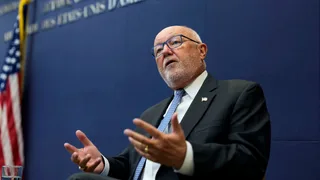
"This is consistent with other current trends. Red states in the U.S. are facing co-ordinated efforts to reduce income taxation and to increase sales taxes, which would have similar effects," said Veljko Fotak, an associate professor of finance at the University of Buffalo's School of Management in New York.
The effect is so strong that some economists have suggested the real target of tariffs is not "foreign cheaters" at all but rather the principle of progressive taxation in America.
"Tariffs effectively tax consumption, and lower-income households consume a bigger proportion of their paycheque," Fotak explained. "Taxing consumption sounds fair, until you realize that Warren Buffett and Elon Musk 'consume' a minuscule proportion of their income and an even lower proportion of their wealth."
"Wealthy households tend to spend a bigger proportion of their paycheque on services and things like travel, which are less affected by tariffs than expenditures on manufactured goods. The things you buy at Walmart are impacted by tariffs. Your spa appointment or your kid's violin lessons, much less so."
But the wealth-concentrating effect of tariffs has been made even stronger by the arbitrary and political nature of the U.S. tariff exemption and tariff rebate regimes.
This month, the U.S. Treasury passed the $100-billion mark in refunds paid out to businesses for money lost to Trump’s "Liberation Day" tariffs, ruled unlawful by the U.S. Supreme Court . Another $30 billion remains to be paid under the ruling.
U.S. businessowners don't want to leave their Canadian suppliers, but 50% tariffs might leave them no choice
Walmart was the biggest winner on the refund front, getting back almost $3 billion. Retailer Target received just under $1 billion, dramatically improving its bottom line for the second quarter.
5News aggregated this summary from the outlet’s public feed. The full article, with all the context, is on www.cbc.ca — the content belongs to CBC Politics.