P.E.I. may have more snowshoe hares since Fiona, wildlife biologist says
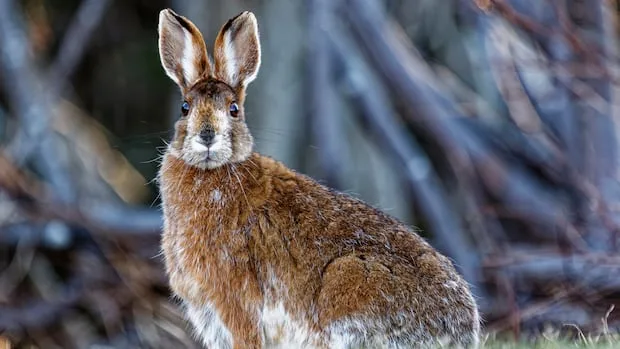
Snowshoe hares appear to be more common across Prince Edward Island in the years since post-tropical storm Fiona, says a provincial wildlife biologist.
Garry Gregory with P.E.I.’s fish and wildlife division said he’s been hearing from Islanders who are suddenly noticing more "rabbits" in their yards.
But those animals aren’t actually rabbits, which are not native to the province. Gregory said what Islanders are seeing are almost certainly snowshoe hares.
"We certainly get lots of calls about rabbits, and lots of … anecdotal reports of people seeing snowshoe hares in and about their yards and properties," he said.
"To say that it is more than usual would be difficult to say … but certainly we get lots of reports."
While there’s no formal tracking data to confirm whether the snowshoe hare population has increased, Gregory said changes to the landscape since Fiona make it "absolutely reasonable" to suspect the number has increased.
He added that the 2022 storm left behind dense, tangled debris in forests and woodlots across P.E.I. Brush piles, downed trees and thick patches of deadfall have created escape cover that’s ideal for hares.
"A lot of the woods … you couldn’t get through it unless you were a snowshoe hare," Gregory said of the period after the storm. "If you were a predator of any size … snowshoe hare would be basically inaccessible."
With more places to hide, more hares survive and that can lead to a bump in the population.
Over time, that cover will decline as debris breaks down and coniferous trees lose their needles. As that happens, Gregory said, the advantages hares gained from the storm will slowly ease.
When Fiona knocked down trees, it also opened up the forest canopy to sunlight, Gregory said.
That’s allowed early successional, shade-intolerant plants to take off — the kind of growth hares rely on for food in winter.
Gregory points to willows, grey birch, some maples and pin cherry as examples.
"That would be prime peak of winter forage availability for snowshoe hares," he said, noting that hares feed on the twigs and buds of those species in the colder months.
5News aggregated this summary from the outlet’s public feed. The full article, with all the context, is on www.cbc.ca — the content belongs to CBC Technology.