In Canada's largest honey-producing region, beekeepers brace for U.S. tariffs
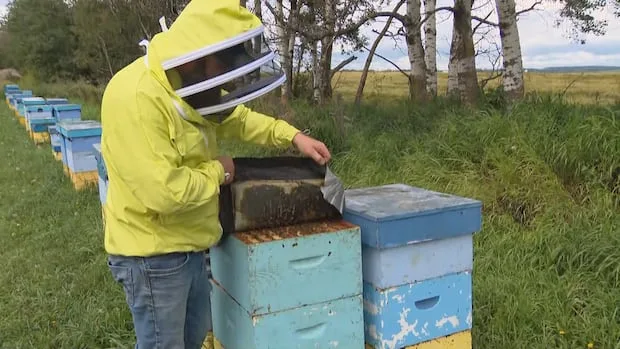
Harvest is in full swing at a family-run honey farm in central Alberta — but there's a cloud hanging over this year's sweet crop as producers watch the clock tick down on a trade agreement with the United States.
“It's just one more frustration,” said Lorne Prins, who owns Gull Lake Honey, located about 130 kilometres south of Edmonton. The operation has nearly 3,000 hives spread across roughly 90 locations in the heart of Canada’s largest honey-producing province.
The looming Aug. 19 deadline has thousands of local producers like Prins bracing for a major sting. A proposed 50 per cent U.S. tariff on honey could effectively close off their biggest export market, he said.
The U.S. administration threatened the levy in July on hundreds of Canadian goods, citing what it describes as unfair trade practices. The threat caught industry stakeholders off-guard, given that Canadian honey was previously exempt from tariffs under the Canada-U.S.-Mexico Agreement (CUSMA) on trade.
The wet summer had already created stress about honey production levels this year, Prin said. "Now to even consider the possibility of our honey prices being squashed by U.S. tariffs.”
Rod Scarlett, executive director of the Canadian Honey Council, expressed “surprise and shock” over the inclusion of honey among new goods potentially facing tariffs.
Nationally, the industry generated more than $241 million in revenues in 2025
“Alberta is Canada’s biggest producer,” Scarlett said. “The Prairies are about 60 per cent of the honey production. Alberta represents 40 per cent of that.”
Though Prins solely sells locally, he will still be hit by new tariffs, saying he expects domestic prices will plummet if Canadian exporters lose their top international buyer.
“It will strand an enormous amount of honey on the Prairies and it could be really, really damaging to our price this year,” Prins said.
Canadian beekeepers typically send about 70 per cent of their honey exports to the United States. Scarlett said that volume likely surged over the last fortnight as producers raced to move their shipments south before the tariffs take effect.
‘“[The] U.S. packers were quite worried that they wouldn't be able to get Canadian honey. They moved up their contract delivery dates and prices,” Scarlett said.
Jeremy Olthof, owner and operator of Tees Bees, about 150 kilometres south of Edmonton, said the tariff threat is an added stress in a year where wet weather has already disrupted timelines and delayed extraction schedules.
“I know of a lot of beekeepers that are scrambling,” he said. “And because this year … everything is so much later, there just isn't enough honey in barrels right now to get moved in time.”
5News aggregated this summary from the outlet’s public feed. The full article, with all the context, is on www.cbc.ca — the content belongs to CBC News.