What dandelions and bees can teach us about our responsibilities to the natural world

In spring, on the traditional and treaty lands of the Mississaugas of the Credit, young children, Anishinaabe storytellers and educators walk together with Aki (Land) and Nibi (Water).
I’m a researcher and professor of early childhood and someone of French-Canadian and Hungarian descent living as a guest in Tkaronto/Toronto.
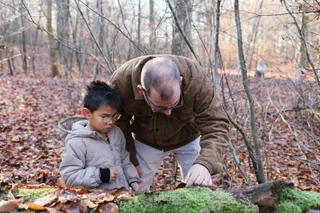
I’m among the educators exploring children’s land-based learning in a children’s forest nature program in the Humber Arboretum , in the west Humber River Valley in the northwest part of Toronto.
Outdoor and nature-based programs support children’s connections with the natural world and the development of ecological awareness .
Yet, my early experiences engaging with outdoor learning — in conjunction with the TRC’s Calls to Action related to fostering respect for Indigenous knowledge and worldviews among all students, and developing culturally appropriate early childhood education programs for Indigenous families — suggested another possibility.
What if outdoor play also helps children learn how to live in kinship with the natural world? Read more: Children make connections to Aki (Earth) through Anishinaabe teachings Dandelions, bees as teachers During our spring walk on the land as part of the program, we hear those who are returning (red-winged blackbirds) and those who stayed (green frogs).
We notice buzzing bees landing on dandelions, among the first flowers to bloom in spring.
In these ways, together — by paying attention to what we see — children and adults walking together receive the gifts of Mother Earth.
We also receive these gifts through stories: As shared by Anisihinaabe participants, the bird and frog songs are singing the land and the waters awake.
As an educator, I share with children that dandelions are one of the first foods for emerging native bees — pollinators that help more flowers grow.
I invite children to pause and wonder: What are the dandelion and bee teaching us? When one child reaches to pick a dandelion, the other children gently encourage their friend not to take it.
They remember other times we have paused and wondered about dandelions, and talked about them.
It’s the bees’ “first juice,” they explain.
The dandelion is left — a choice, a practice, a way of being in relation.
5News aggregated this summary from the outlet’s public feed. The full article, with all the context, is on theconversation.com — the content belongs to The Conversation Canada.