What a swordfish washing up on British Columbia’s coast says about our changing oceans
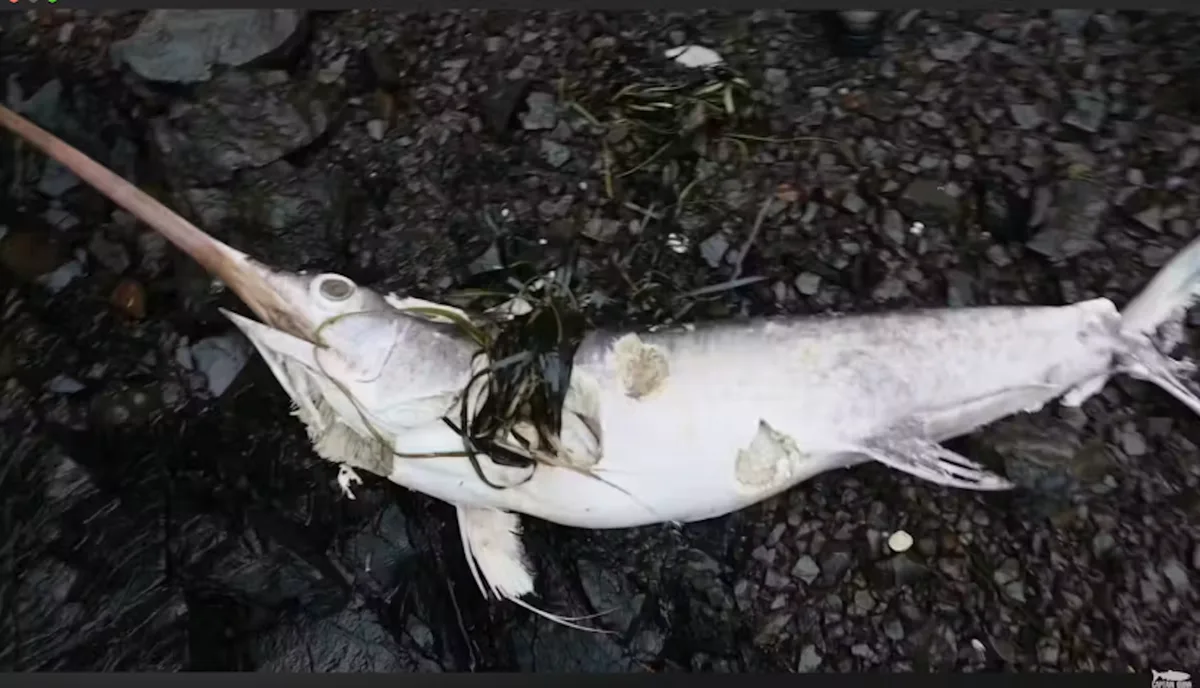
The carcass of a swordfish recently discovered in Haida Gwaii. (Quinn Barabash) Filmmaker and outdoorsperson Quinn Barabash recently made headlines when he found a nearly two-metre-long swordfish carcass on the remote shores of Haida Gwaii in northern British Columbia.
Swordfish are large-bodied, highly migratory fish typically found in temperate and warmer tropical waters far south of Haida Gwaii.
They are thought to have only been documented in B.C. twice before, so it’s a rare find.
Long-term ocean warming alongside the developing El Niño may be making B.C.’s waters more attractive to these warm-water species.
While this sighting is unusual and exciting, it also serves as a reminder that our oceans are rapidly changing and we need to adapt to these changes.
Quinn Barabash finding a swordfish on Haida Gwaii. (Quinn Barabash) Warm water visitors This isn’t the first time a warm water species has appeared along B.C.’s coast.
During the 2014-16 marine heatwave known as “ the Blob ,” ocean sunfish, Humboldt squid and triggerfish were all sighted off B.C .
More recently, tropical barracuda and even a great white shark have been spotted.
Marine species can move to new locations as they follow favourable ocean conditions.
During extreme events like marine heatwaves, these shifts can bring species far outside their normal ranges.
These sightings make good headlines, but the bigger story is what ocean warming and environmental extremes mean for marine ecosystems and the fisheries and communities that depend on them.
Fisheries at risk Our recent global study analyzed three decades of data covering 1,246 species across 254 regions.
We found that unusually high ocean temperatures and very low primary production can substantially increase the likelihood of extremely low fish catch.
The risk was even greater when these extremes occurred together or across multiple years.
5News aggregated this summary from the outlet’s public feed. The full article, with all the context, is on theconversation.com — the content belongs to The Conversation Canada.