Scientists fear Nepal's disaster is just a glimpse of the carnage climate change could cause
Geoscientist Jakob Steiner says it looks like "someone took a knife," cut a 1,300-metre-wide chunk from the lower part of a glacier on Nepal's Himalayas and "dropped it off the mountain cliff."
The researcher at the University of Graz in Austria says the "blast" of ice, rock and sediment that came crashing down 1.2 km, from a height of 5,000 metres above sea level, temporarily dammed the river below and created a lake.
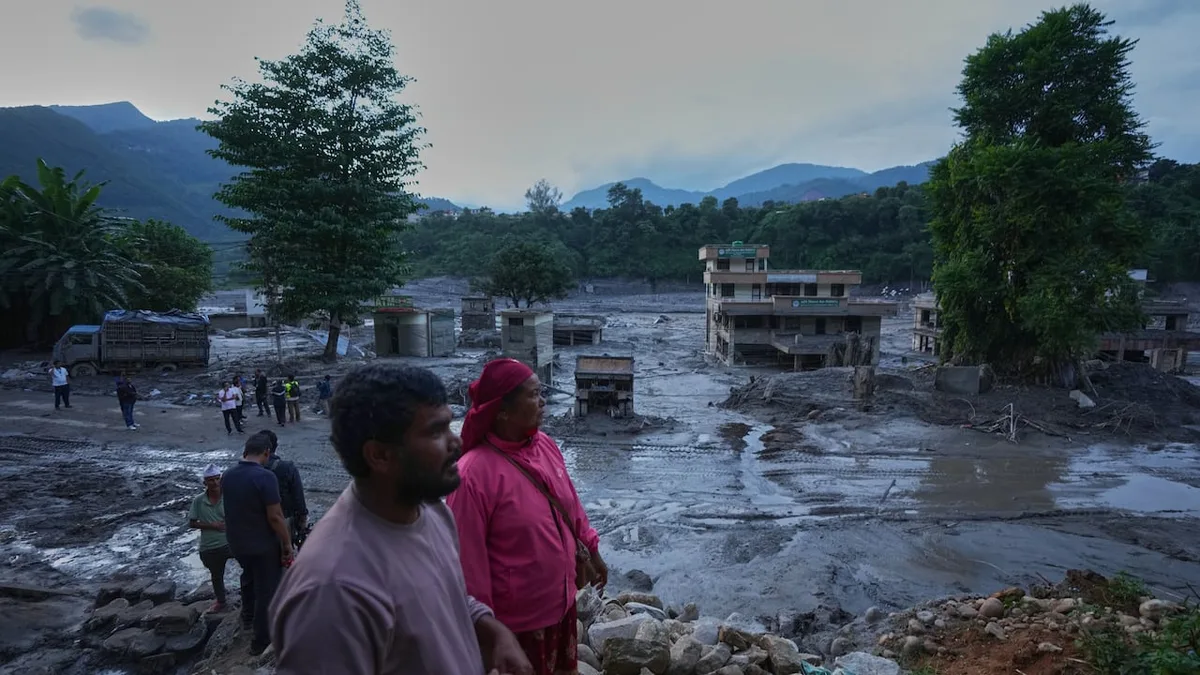
Once that lake filled with the enormous amount of water released from the glacier, Steiner says the dam breached and unleashed the violent torrent that pummeled downstream villages on either side of the border and buried them in mud.
Additional lakes formed in the aftermath of the initial calamity could soon rupture as well, potentially worsening the death and destruction. So far, at least 579 people have been killed , with about 1,400 others unaccounted for in Nepal, including 32 Canadian citizens and permanent residents.
Indigenous people in the area have long warned climbers that the mountain, Langtang Lirung, is an "angry mountain," Steiner told CBC News Network in an interview from Dhaka, Bangladesh. "They are proven right every year, again and again."
Some climate scientists are cautious about prematurely linking human caused-climate change as the sole trigger of this specific collapse.
But experts who research both glacier hydrology and the effects global warming is having on the frozen parts of the planet known as the cryosphere say this was the kind of catastrophe they've been warning about for years, particularly in the Himalayas.
Nepal flash flood death toll climbs to 579, with 32 Canadians, permanent residents among missing
John Pomeroy, director of the University of Saskatchewan's Centre for Hydrology, says horrific events like this are becoming much more frequent as the effects of climate change are "destroying our natural infrastructure."
"And it's happening in a wink of an eye in Earth's history and too fast for humans to easily adapt," he said.
Manjueet Dhakal, a climate scientist in Nepal's capital Kathmandu, had passed through the devastated region on a family trip just days before the collapse.
It was hard for him to see areas he had just visited completely washed away, including the country's largest solar power generation plant.
He says the Himalayas are a "very complicated landmass" that's part of the greater Hindu Kush Himalaya region stretching from Myanmar to Afghanistan and containing more than 63,000 glaciers .
5News aggregated this summary from the outlet’s public feed. The full article, with all the context, is on www.cbc.ca — the content belongs to CBC News.