Trump’s geopolitical aims, not economics, are behind his trade hostility towards Canada
A seismic shift in American geopolitics explains the breakdown in United States-Canada trade relations.
Understanding U.S. security policy is critical as Canada faces stark choices.
The Donald Trump administration’s 2025 National Security Strategy (NSS) appears to mark a sharp break in U.S. foreign policy.
It explicitly rejects the U.S.-enforced, rules-based international order and liberalized trade regime that has guided American foreign policy since 1945.
Read more: Venezuela attack, Greenland threats and Gaza assault mark the collapse of international legal order It resurrects, instead, longstanding and deeply rooted isolationist and protectionist ideologies that have shaped much of the history of American foreign policy.
But, it also asserts the “Trump Corollary” to the Monroe Doctrine .
The legacy of the Monroe Doctrine Since its creation by President James Monroe in 1823, the Monroe Doctrine has been a mainstay of American foreign policy.
It asserts the exclusive right of the U.S. to expel any perceived foreign threats from the Western Hemisphere.
But it also claims the right to intervene in any hemispheric country whose domestic affairs present a threat to American security interests.
The 2026 capture of Venezuelan leader Nicolás Maduro is ostensibly the most recent example, as far as the Trump administration is concerned.
But the list is long.
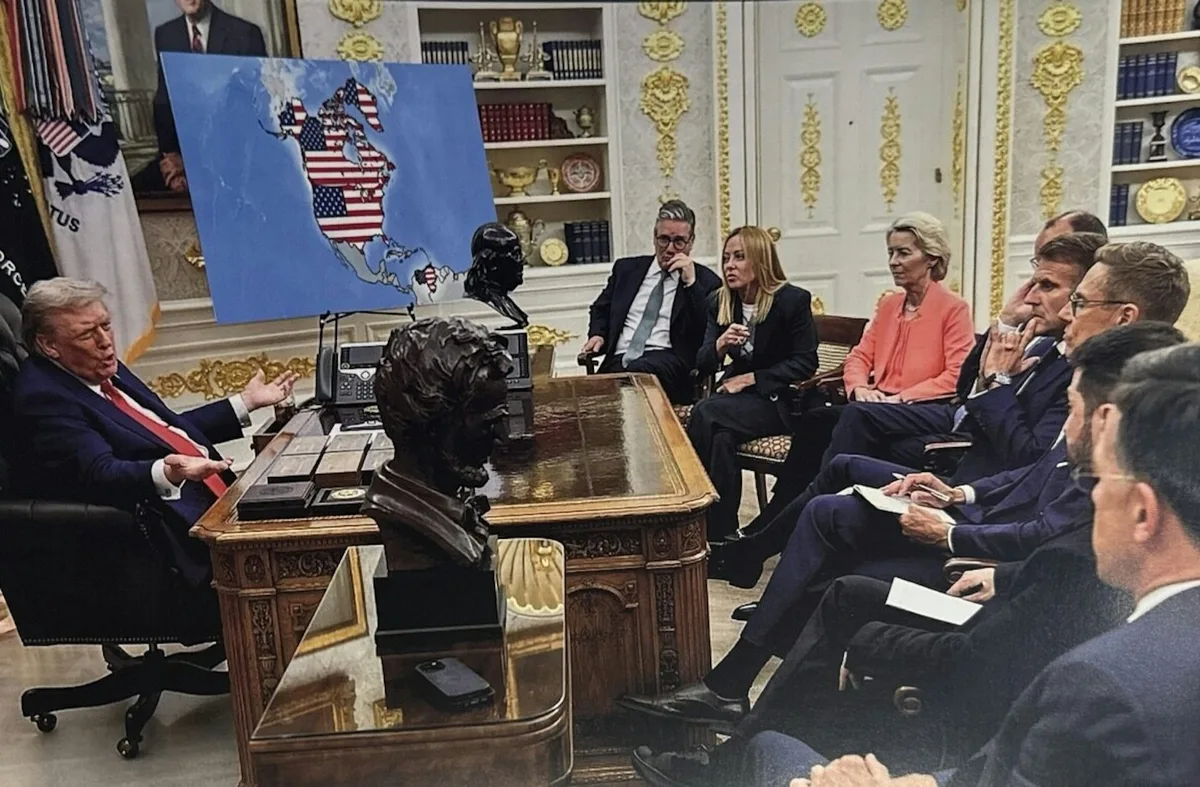
An altered image that U.S.
President Donald Trump posted on Truth Social features the American flag superimposed over a map that includes Canada and Greenland. (Donald J.
Trump via Truth Social) In its application of the Monroe Doctrine, the U.S. has always looked south; now, it’s looking north too.
5News aggregated this summary from the outlet’s public feed. The full article, with all the context, is on theconversation.com — the content belongs to The Conversation Canada.