Where does all the hardware go? The hidden environmental footprint of AI data centres

The Canadian government recently launched its Responsible Data Centre Development Principles , enabling the country to set the terms for responsible growth of artificial intelligence computing power and storage.
The promise: “ Building more capacity here at home will give Canada greater resilience and choice, while helping Canadian researchers, innovators and businesses build, deploy and scale. ” The principles set five expectations for new data centre projects: to create lasting local benefits, protect Canadians from extra electricity costs, minimize water use and environmental impacts, be transparent about local impacts and bring strategic value to Canada.
Read more: Data centres: Opposing them and developing them are not the only two choices Meanwhile another part of the story remains out of view: data centres powering AI also need servers, processors, storage devices, networking equipment and cooling systems.
What will become of all this hardware? This question deserves the same scrutiny as the electricity and water consumed throughout the life of these centres.
Before a server is switched on There is good reason for the focus on energy in the AI infrastructure debate.
International Energy Agency projections show that electricity consumption by data centres will increase from about 415 terawatt-hours in 2024 to more than 945 TWh in 2030.
This is a 15 per cent annual growth in demand.
More powerful servers, driven by AI adoption, account for half of this increase.
Nevertheless, electricity consumption is only one part of the life cycle of computing equipment.
Before a server reaches a data centre, raw materials have been extracted, processed and turned into manufactured components.
At the end of its operational life, the remaining value of the server depends on the ability to repair, upgrade, reuse, disassemble or recycle it.
Generative AI, particularly large language models, could create between 1.2 million and five million tonnes of accumulated electronic waste between 2020 and 2030, according to several scenarios developed in a 2024 study published in Nature Computational Science .
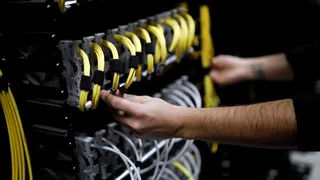
The circular approach goes beyond recycling to consider how products can be produced to enable easier refurbishment, upgrading and reuse. (Unsplash) The study identifies the “circular economy” as a strategic way to reduce this type of waste by 16 to 86 per cent.
Otherwise, how will this enormous waste stream be absorbed? According to the Global E-waste Monitor , 62 million tons of e-waste were generated globally in 2022 and only 22.3 per cent of this was documented, collected and recycled in an environmentally responsible manner.
5News aggregated this summary from the outlet’s public feed. The full article, with all the context, is on theconversation.com — the content belongs to The Conversation Canada.