Climate groups say federal work on climate adaption is not enough
Three years after it formally launched its national climate adaptation strategy , the federal government says Canadians are more aware of the risks and more resilient to flooding , wildfires and major storms caused by climate change.
But an analysis by the Canadian Climate Institute suggests there is little sign any of that work has actually reduced the risks Canadians face.
The strategy, finalized in 2023, set out a road map for preparing communities for extreme weather events and a warming climate. The government estimates every dollar spent on proactive adaptation measures can save taxpayers between $13 and $15 in the long term.
The progress report touts the work Ottawa has done on the strategy since its launch and claims it hit its short-term targets along the way.
Those targets include having 92 per cent of Canadians aware of risks facing their household and getting 30 per cent of Canadians to take steps to respond to risks facing their household.
But Ryan Ness, director of adaptation for the Canadian Climate Institute, said the report “paints an overly optimistic picture of success.”
“The progress report shows that the federal government’s been doing quite a number of things. Lots of programs and initiatives and projects,” Ness said.
“But there’s little evidence that any of it is actually reducing the most important risk that Canada is facing right now.”
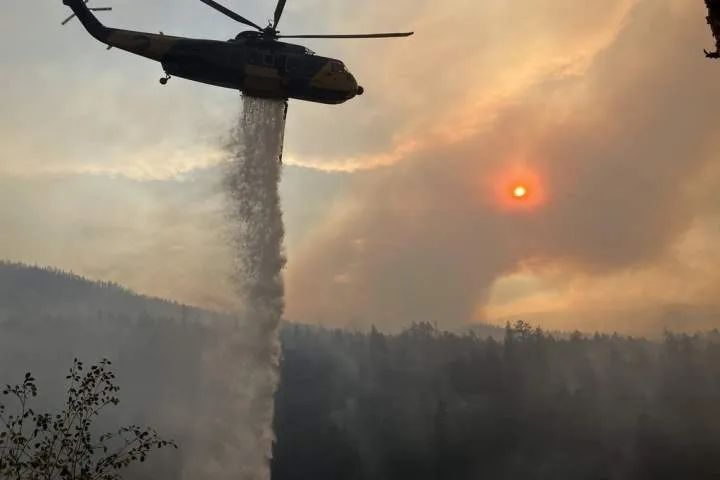
Ness said the biggest risks facing Canadians are the growing number of wildfires, large-scale flooding and extreme heat waves. Since the adaptation strategy was released, Canada has experienced its two worst wildfire seasons on record.
The Canadian National Fire database shows that in 2023, the summer the strategy was released, more than 170,000 square kilometres burned — an area more than twice the size of New Brunswick. In 2025, the second worst year on record, fires consumed about 83,000 square kilometres, an area larger than Lake Superior.
Ness said that while the strategy speaks to almost everything Ottawa could do about adaptation, it doesn’t identify priority actions or map out ways to make communities more resilient.
“There’s no doubt that sort of on an individual basis, these projects — at least many of them — have had a positive impact,” Ness said.
“The issue is that the data is largely anecdotal. It describes a program that was done here or an investment that was made over there. It doesn’t take the big picture of (whether) things (are) actually getting better in Canada.
“Are fewer people dying from extreme heat? Are fewer homes getting flooded every year? Are the losses and number of evacuations from wildfire getting less over time?”
5News aggregated this summary from the outlet’s public feed. The full article, with all the context, is on globalnews.ca — the content belongs to Global News.