Columbia House Record Club is shutting down. Wait, it was still in business?
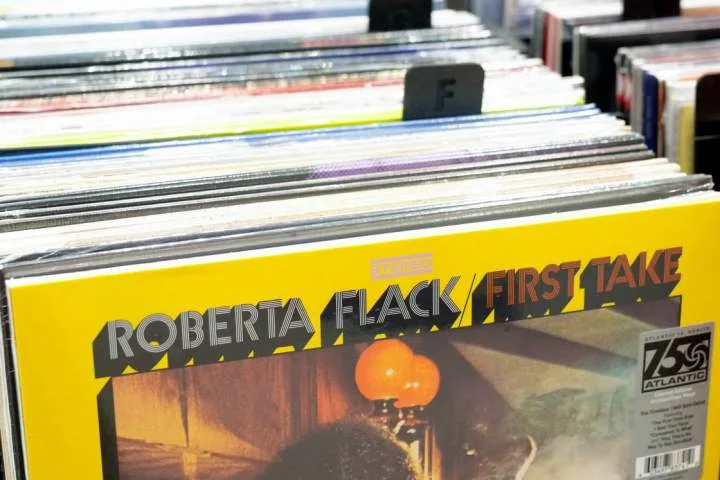
If you’re of a certain age, you’ll remember ads and newspaper inserts from the Columbia House Record Club promising an unbelievable deal on records and tapes. We were told we could have seven/eight/11/12/13 albums from a long list of them for just a penny. One cent! That used to be the price of a single piece of Hubba-Bubba bubblegum!
Fantastic! An instant record collection practically for free! All you had to do was agree to buy a certain number of albums over a specified time at regular club prices. The trick was you didn’t get to choose which albums those were. That meant you were often stuck buying a record you didn’t care about. And they were often big into negative option billing, meaning albums kept coming unless you cancelled.
There were other downsides, too. Record club vinyl often wasn’t as, er, robust as the records you bought in stores. And while labels loved record clubs because they juiced sales numbers, artists did not. Many contracts contained clauses that said any records part of “12 for 1 cent” promotions were ineligible for royalties.
All of the above is moot because Columbia House, the most famous of the record clubs, is closing on Sept. 15. This marks the end of a 71-year-old business that’s been around since 1955.
It all began as an experiment to see if Columbia, the inventor of the 33 1/3 RPM album and a division of CBS Records, could get more people into the still relatively new LP format. Originally, offerings were largely jazz, Broadway recordings and easy-listening records directed at the very first generation of hi-fi nuts. Everything was released in mono until stereo records started hitting the market in the very late 1950s.
The experiment worked as records flew out of its fulfilment offices on Fifth Avenue in NYC. But it quickly outgrew those premises and opened a distribution centre in Terre Haute, Ind., in 1956. Why there? The city hosted a CBS Records pressing plant and was a railway hub, making shipping easy.
Just two years in, the company had seven million subscribers, requiring a move into computers just to keep track of everything. That made Columbia House one of the very first American industries to embrace the new technology. By 1963, Columbia House accounted for a whopping 10 per cent of the music retail market, thanks to the massive growth of rock ‘n’ roll (first marketed under a category called “Teen Hits”) and greater adoption of turntables that played LPs.
As a subscriber, you also had a choice of formats. Columbia House offered albums on 8-track (the Columbia Cartridge Club, est. 1965) and cassette (the Cassette Club, 1969) in addition to the original vinyl club and the reel-to-reel tape club (est. 1960) for the super audio nerds.
Canada got its own division of Columbia House in 1979, for which 100,000 of us signed up within a year. VHS tapes entered the picture in 1981 and compact discs first went on offer in 1985. When Sony acquired CBS Records in 1987, the record club was part of the deal. Four years later, Sony and Warner turned the company into a joint venture. A Mexican division appeared in 1995.
Columbia House was at its peak in 1996, during the compact disc’s glory years.
5News aggregated this summary from the outlet’s public feed. The full article, with all the context, is on globalnews.ca — the content belongs to Global News Entertainment.