Rollout of AI surveillance by Montreal police raises privacy concerns
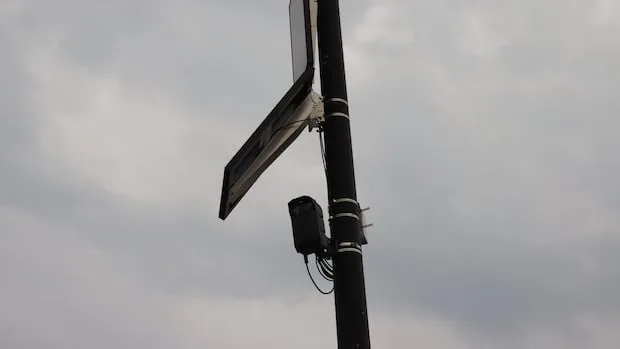
Montreal police are quietly growing their network of AI-powered tools to track vehicles and people across the city, raising questions about public transparency and privacy rights.
A high-powered camera able to scan and identify vehicles was spotted earlier this week by a Radio-Canada reporter, on a lamp post along Henri-Bourassa Boulevard in Montreal’s Rivière-des-Prairies neighbourhood.
It was quickly taken down on Wednesday, after Radio-Canada published an article about the camera.
The device used was a Cloudrunner CR-H2, manufactured by Montreal-based company Genetec, the Service de police de la Ville de Montréal (SPVM) later confirmed.
Similar to the controversial Flock Safety cameras widely used in the United States, the system does more than scan licence plates.
It also captures and stores specific vehicle characteristics, including colour, make and model, according to the company’s website .
While Flock cameras in the U.S. share data in a central database accessible to multiple police forces, Genetec's system differs in that the collected information is managed by its specific operator.
SPVM spokesperson Marc-Antoine Bélanger told CBC News that access to the captured images is used exclusively for the investigators in charge of the targeted work.
Bélanger said in an email that the camera was removed to "preserve our ongoing investigative strategies."
But privacy advocates say there has been a lack of transparency in rolling out this new technology.
Montreal police turn to AI to help with investigations, raising concerns about civil liberties
Dominique Peschard, a spokesperson for the Ligue des droits et libertés , a Quebec human rights group, said police need to keep the public informed about the kind of technology they are using — and can do so without compromising their work.
“We're not asking what they are doing in detail, but what are the procedures?” Peschard said in an interview.
“Investigative techniques are getting more and more invasive with technology. You need more and more oversight to make sure it doesn’t go overboard and infringe on our Charter rights.”
5News aggregated this summary from the outlet’s public feed. The full article, with all the context, is on www.cbc.ca — the content belongs to CBC Canada.