Shocked, Then Trucked. Why BC Arranges Road Trips for Live Fish
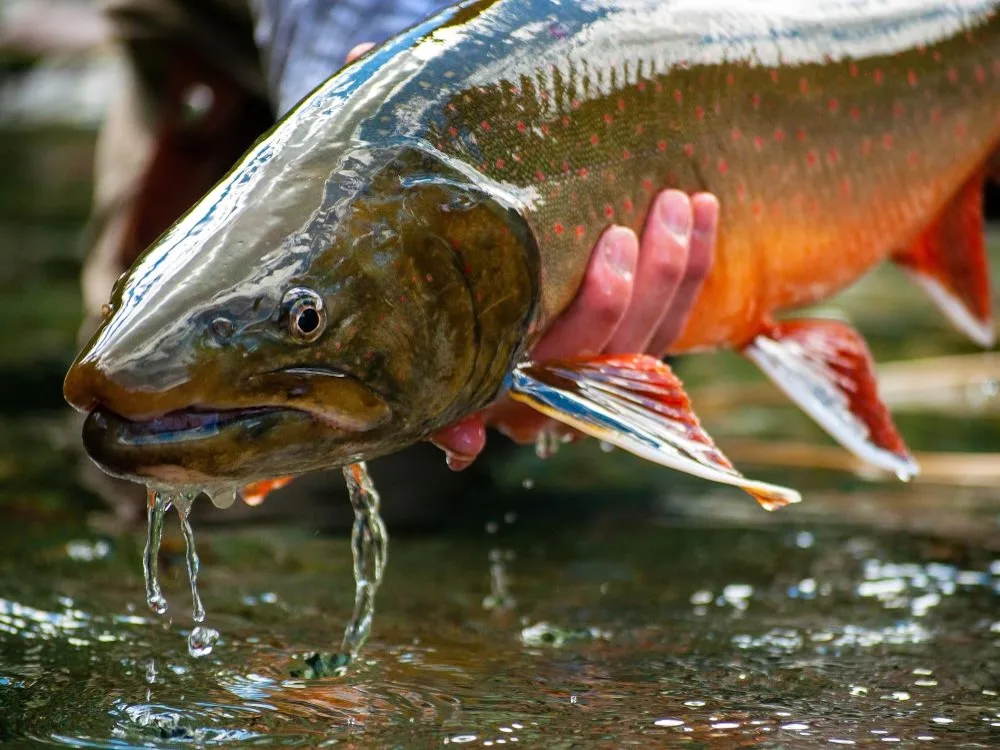
In a scenario that sounds like something in a Dr. Seuss book, bull trout and other fish are travelling past the Site C dam on the back of a Ford pickup truck as part of an elaborate plan to save fish in B.C.’s Peace River.
Their journey begins near the foot of the dam, where fish seeking to swim upstream can enter a flow channel to a holding pool at the dam’s $47.2-million fish passage facility.
From there, they are crowded into an elevator-like fish lock and lifted to a sorting area where they are sent in a chute to a tank and anesthetized.
The fish are then divided into “transport pods” before they are trucked up to 50 kilometres upstream in a tank and released into the Site C reservoir, which the B.C. government recently renamed Dreamer Lake.
Bull trout, a species at risk of extinction in B.C., are a primary focus of the “trap and haul” fish transport scheme because the $16-billion dam blocked their way to spawning grounds.
Whitney Deane, media relations and issues management spokesperson for BC Hydro, told The Tyee that the fish passage facility aims to maintain access to habitat and “preserve connectivity” for bull trout that historically migrated past the dam site.
She said the facility also supports commitments to First Nations, noting that fish are “an integral part of their cultural values and way of life.”
But two retired fish biologists question whether the facility can save the iconic fish, beloved by anglers, that is sometimes called an “aquatic grizzly bear” because it’s a top predator and needs healthy, wild ecosystems to survive.
Nick Baccante, the former regional section head of the B.C. government’s fish and wildlife branch, told The Tyee that the fish passage facility is “a waste of money,” while Alberta scientist Lorne Fitch compared labour-intensive efforts to move bull trout past the Site C dam to “putting lipstick on a corpse.”
The permanent facility — whose price tag more than quadrupled from an initial $10.6 million — was initially pegged to cost BC Hydro customers an estimated $1.5 million a year to operate, Deane confirmed. She said costs were about $1 million during the facility’s first full operating year and are expected to increase in the near term, before stabilizing.
Details about the fish transport scheme are in an unpublished technical memorandum to BC Hydro from WSP Canada, an engineering, science and infrastructure solutions company, that The Tyee reviewed.
According to the memorandum, 316 bull trout were transported past the dam last year, the first year the permanent fish passage facility was operating.
That’s slightly more than a quarter of the bull trout that migrated past the dam site prior to construction. (BC Hydro earlier reported an estimated 8,000 bull trout in the Site C dam region, while Deane said 15 per cent of the bull trout — about 1,200 — used to migrate past the dam site.)
But the fish passage facility was frequently out of commission last year, so about one out of every four bull trout transported past the dam were caught manually using a technique called electroshocking — sending an electrical current through the water to stun fish so they can be netted.
5News aggregated this summary from the outlet’s public feed. The full article, with all the context, is on thetyee.ca — the content belongs to The Tyee.