Endangered monarch butterflies boom amid wet hot Canadian summer on the Prairies
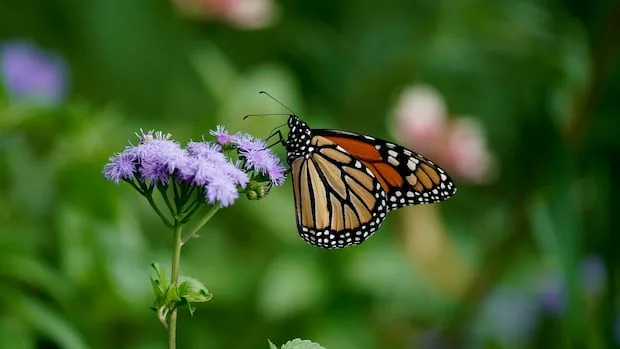
MaryAnn Lepp has never seen so many monarchs go through their magical metamorphosis in her garden — counting 20 caterpillars munching on her swamp milkweed in a single day this week.
She's among hundreds of Canadian monarch enthusiasts witnessing an apparent boom emerge in backyard milkweed patches flourishing amid wet and hot conditions on parts of the Prairie this summer.
"This is chrysalis No. 2 ... I'm so excited," Lepp says, scanning her garden for monarch cocoons in La Broquerie, about 60 kilometres southeast of Winnipeg.
"We've seen a lot more butterflies this year than we have in the past."
Conservation experts can't say for certain whether favourable weather is the main thing driving the surge, which butterfly nerds are giddily chronicling in social media groups like Manitoba Monarch Mission.
But they can say the wave of anecdotal reports of caterpillars, chrysalises and monarch butterflies — known for their epic annual migration between Canada and Mexico — is a good sign for the federally endangered species.
"We're seeing lots and lots of monarchs this year in Winnipeg, tons," said Marika Olynyk, curator of the Living Prairie Museum, which just wrapped its annual monarch festival.
"There's sort of been a steady amount of caterpillars, chrysalises and butterflies almost all summer long."
The tall grass prairie preserve in Winnipeg hosts many native plants pollinators love, including several milkweed varieties.
Monarch butterflies enjoy nectar from milkweed flowers, but they have a broad enough palette to sup from a number of flowering plants, including the pokey-looking meadow blazing star in full bloom at the prairie museum.
But monarchs are very picky at the caterpillar stage. The so-called "cats" only eat milkweed leaves.
Despite scores of people like Lepp planting milkweed, it and native wildflowers still aren't nearly as plentiful or widespread as they were historically due to the conversion of native grasslands to farmland.
"Tallgrass Prairie used to cover huge amounts of the centre of North America. Almost all of it is gone," she said.
"One of the things that we see as we lose the species, we're also losing the habitat. Monarchs are a really good symbol of that species loss and that habitat loss, unfortunately."
5News aggregated this summary from the outlet’s public feed. The full article, with all the context, is on www.cbc.ca — the content belongs to CBC Technology.