TransLink Ridership Is Down. More Buses Are the Answer
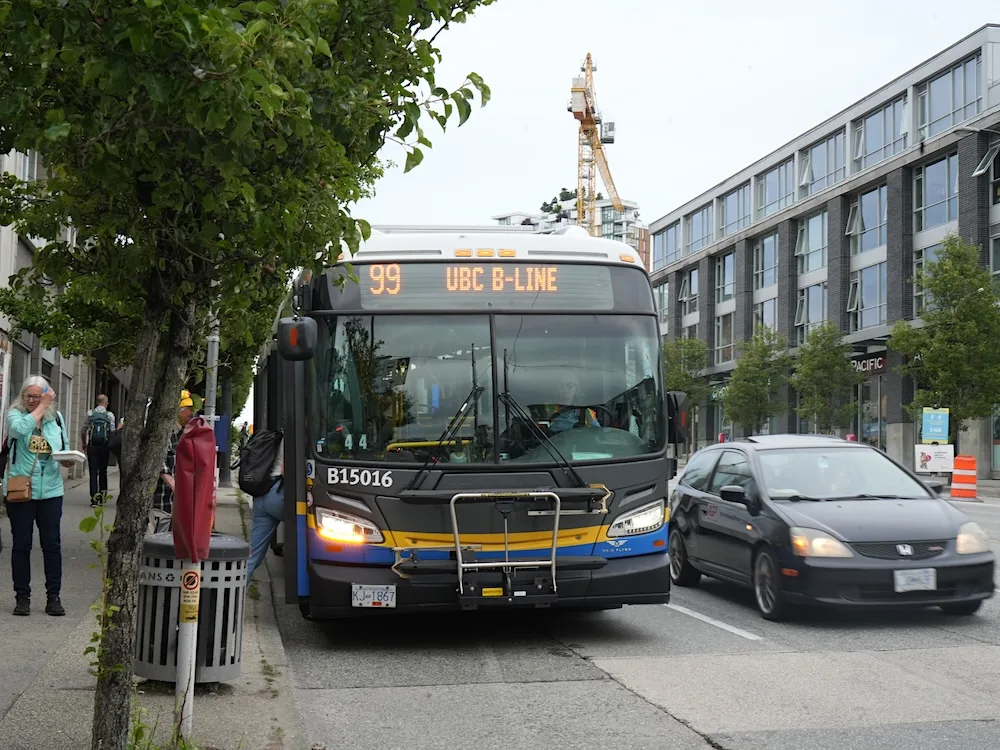
After a high World Cup ridership , TransLink’s 2025 Transit Service Performance Review may feel like a bit of a letdown.
The Metro Vancouver region grew by just under 5,300 people in 2025. Compare that with 2023 and 2024, when this part of B.C. expanded by more than 100,000 additional people annually.
Last year’s population decline was due in large part to a massive reduction in the number of international students and temporary workers, who typically take transit.
As a result, the number of TransLink riders overall actually decreased by 1.5 per cent or 3.3 million trips in 2025, over 2024.
This hit buses — 60 per cent of all transit boardings — and the Expo and Millennium SkyTrain lines the hardest. Meanwhile the Canada Line, SeaBus, HandyDart and West Coast Express all saw modest ridership increases in 2025.
But bus rides aren’t dropping evenly across the board, said Denis Agar, executive director of the non-profit Movement: Metro Vancouver Transit Riders, which advocates on behalf of transit users.
“In the places where transit got improved, transit ridership is up. And in the places where transit got cut back, transit ridership is down,” said Agar.
“It’s so obvious, and we just keep getting evidence that indicates that when you make transit faster, more reliable, competitive with driving, it will grow. It will absolutely attract people, basically, immediately to its service. And it will keep growing.”
TransLink reaped the benefits of a greater investment into Surrey, as overall ridership rose significantly in 2025. Out of the top 10 bus routes by growth over 2019 ridership — before the dip in riders during the height of pandemic restrictions — eight are in Surrey.
But TransLink also made cuts to some Vancouver bus routes in 2020 that have not been reversed. As a result, the top 10 bus routes with decreased ridership are all in Vancouver. Specifically, bus routes 20, 30 and 8 saw boardings drop more than 50 per cent in 2025, compared with 2019.
With TransLink facing a significant deficit in 2024 that could have resulted in up to 50 per cent service cuts had the province and municipalities not stepped in, Agar is paying attention to this public transit system snapshot.
“If you’re a person that rides transit, or cares about transit, or wants to see congestion go down, or wants to see climate change defeated, you should be interested in transit growing,” he said.
Benefits of improved transit access include saving families tens of thousands of dollars annually in car-related costs, reducing greenhouse gas emissions, improving air quality and freeing up roads for transporting goods we all rely on.
“If we just put buses on the roads, people will take them,” Agar said.
5News aggregated this summary from the outlet’s public feed. The full article, with all the context, is on thetyee.ca — the content belongs to The Tyee.