Bald Range wildfire: New orders issued as some residents allowed home
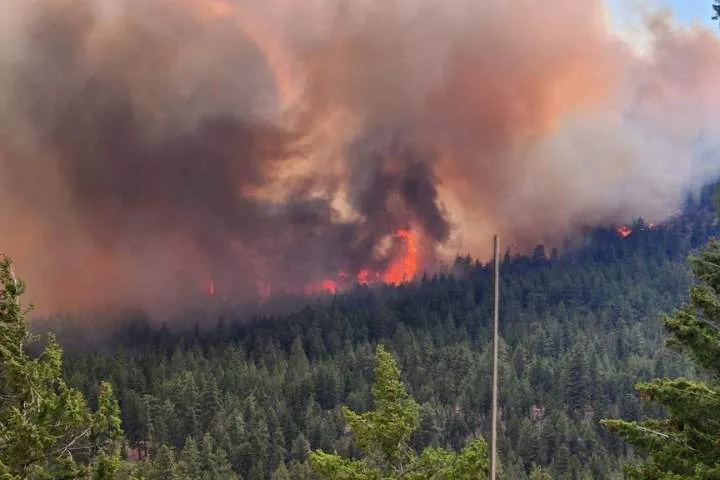
The Bald Range wildfire near Summerland, B.C., is more than 19,800 hectares in size and hundreds of firefighters continue to battle the flames and protect homes and infrastructure.
The fire has forced two new orders on Friday morning: one evacuation alert and some residents are being allowed home as an evacuation order was partially downgraded.
Meanwhile, the evacuation order for the entire District of Summerland is being partially rescinded and the following region is now under an evacuation alert:
Residents on evacuation alert must be ready to leave their homes at a moment’s notice.
“Yesterday, we did see increased fire activity, rank three to four, which includes sort of moderately vigorous surface fire, torching, and some passive crown fire,” Erin Catherall, fire information officer for the Bald Range wildfire, told Global News.
“In terms of activity on the fire, on the northern flank, which is the Peachland Region, firefighters are continuing to conduct planned ignitions to secure control lines and they are making good progress.”
Catherall said structural protection and firefighters continue to work on the southern flank, which is the area around Mt. Conkle, with Penticton to the south.
“The fire still remains on the western side of Mt. Conkel and west of the ecological reserve,” she added.
“The eastern flank, which is along Highway 97, sort of the Okanagan Lake side, conditions continue to look favourable with suppression efforts progressing well. Aerial scans are happening in that area to identify any hotspots, which crews are actioning and continuing to conduct mop-up operations.”
Highway 97 is now open for through traffic from 7 a.m. to 7 p.m., but could close again if conditions worsen.
“The area of the fire that we did see the most activity yesterday was the western flank in the Princeton-Summerland Road corridor,” Catherall said.
“And we have firefighters and heavy equipment continuing to work in the area to establish and reinforce control lines and conduct operations in that area.”
She said that in June the region received 12 mm of rain, two mm fell in July and there has been no rain in August.
“The drought moisture code, which is an indicator of moisture levels in the deep organic layers of larger fuels, is currently above 1,000. This is exceptionally high for this time of year, as the typical drought code would be around 800.”
5News aggregated this summary from the outlet’s public feed. The full article, with all the context, is on globalnews.ca — the content belongs to Global News.